It’s that time again! On September 10th, Apple announced its newest smartphone models – the iPhone 11, iPhone 11 Pro, and the iPhone 11 Pro Max. The latest iPhones feature many improvements including two rear-facing cameras, an upgraded 12MP front camera, a longer...
Bring your own device (BYOD) policies have permeated nearly every industry due to the convenience and cost-savings it offers to businesses. Still, it’s important to keep in mind that while BYOD policies reduce expenses, they can also have a direct impact on security...
5G is the next generation of mobile broadband that aims to enhance users’ current 4G LTE connection. Our Co-Founder and CEO, Stephen Wakeling, explains how businesses can prepare for 5G and how this will affect the pre-owned device market. Read Stephen's full article...
In the modern workplace, nearly every employee connects to a corporate network and exchanges sensitive information via a mobile device. This significantly increases the risk of a data breach due to malware and/or phishing schemes. According to a 2019 Data Breach...
Recently Rodio was featured in a report by the distinguished analyst Raul Castanon-Martinez and his team at 451 Research on the topic of how enterprise software categories are addressing the digital employee experience for frontline workers in retail operations. The...
Retail isn’t dead, it simply needs to adapt. Keeping up with the latest retail trends is the key to building lasting relationships with the next generation of consumers including Millennials and Gen Z. At the same time, retailers must continue to deliver exceptional...
Phobio has created a second company from its product Rodio. The new startup will focus on workforce communications software using AI, specifically in the retail and healthcare space. Read the full article on Atlanta Inno
For the Second Time, Phobio Appears on the Inc. 5000, Ranking No. 2,753 With Three-Year Revenue Growth of 138 Percent Inc. magazine today revealed that Phobio is No. 2,753 on its 38th annual Inc. 5000 list, the most prestigious ranking of the nation’s fastest-growing...
When it comes to technology and mobile devices, no generation is so savvy, experienced, and demanding as millennials. After all, millennials were born into the digital age. As the largest generation in the U.S., millennials have heavily influenced the development of...
As millennials and Generation Z are rapidly entering and taking over the workplace, they’ve influenced how collaboration and communication, as well as business, gets done. Gone are the days of strictly email communications, only having conference calls around a large...
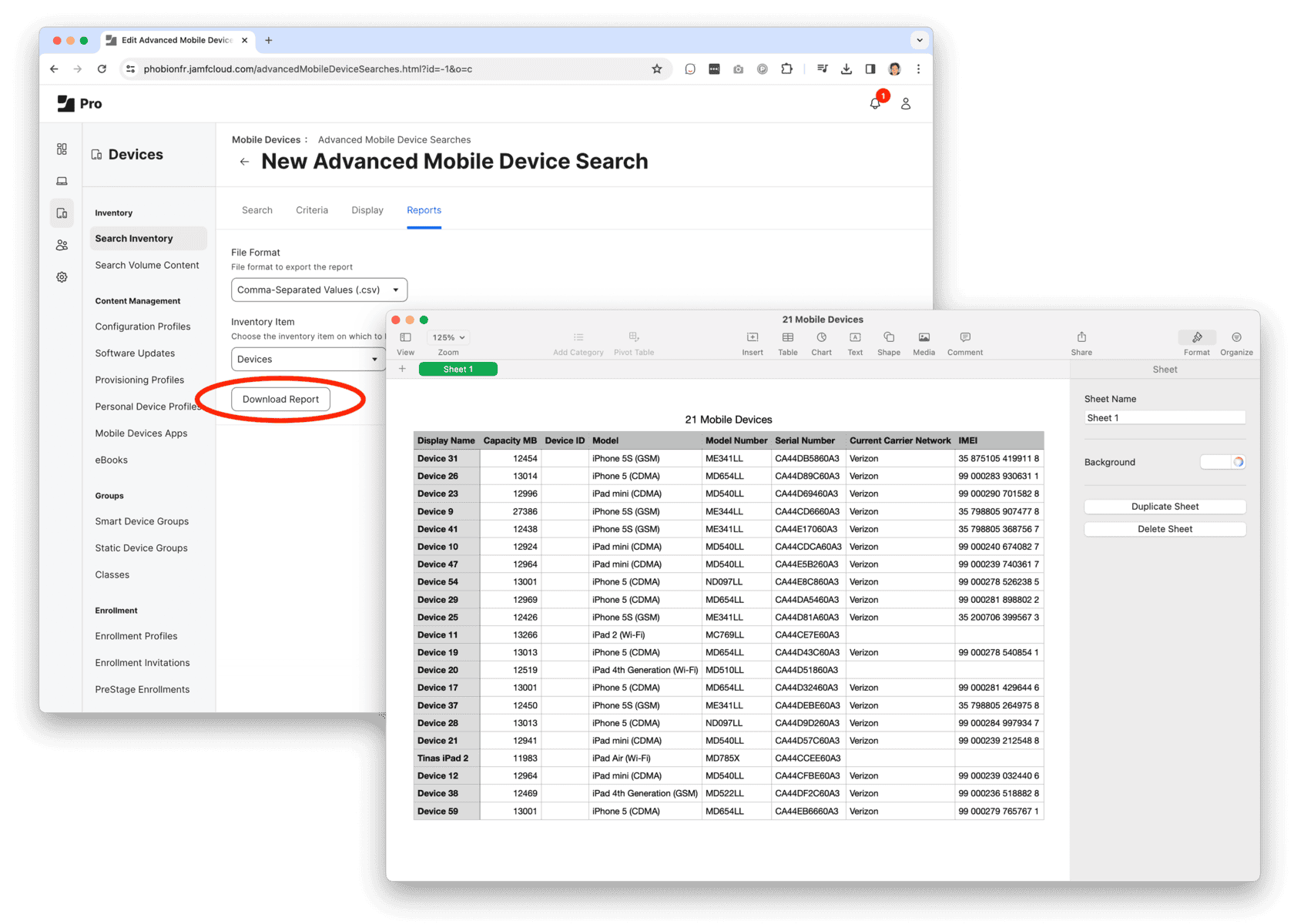
Step 1: Export a list of computers and devices from Jamf.
1. Create an Advanced Inventory Search for Computers and/or Devices
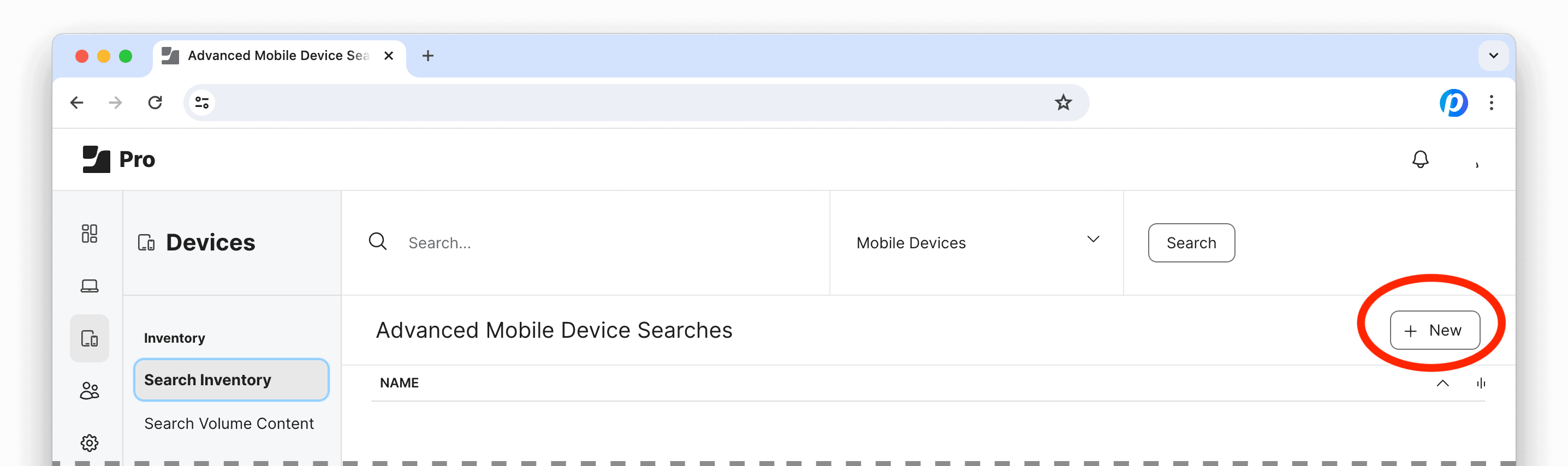
Log into Jamf Pro, under Computers and/or Devices, select Search Inventory and click the “+ New” button to create an Advanced Search.
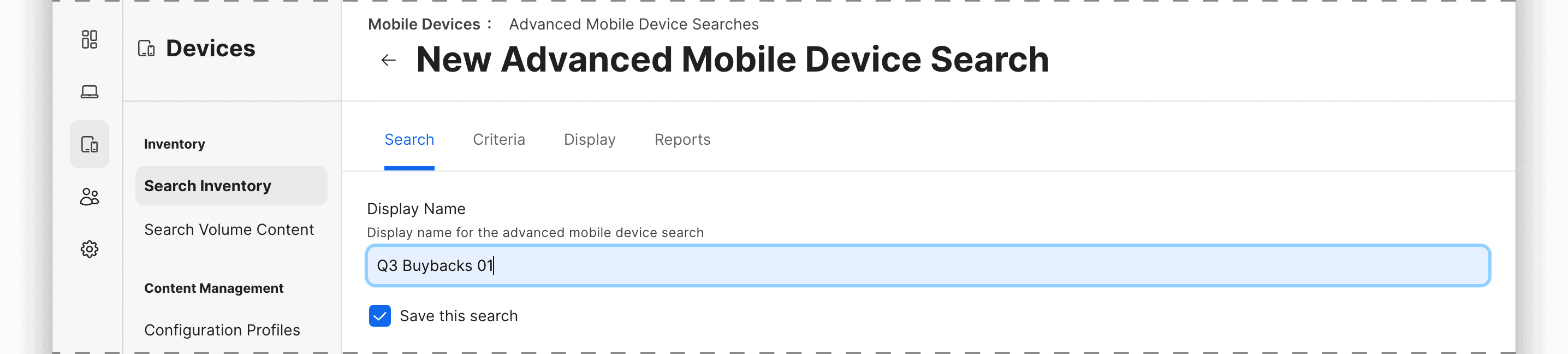
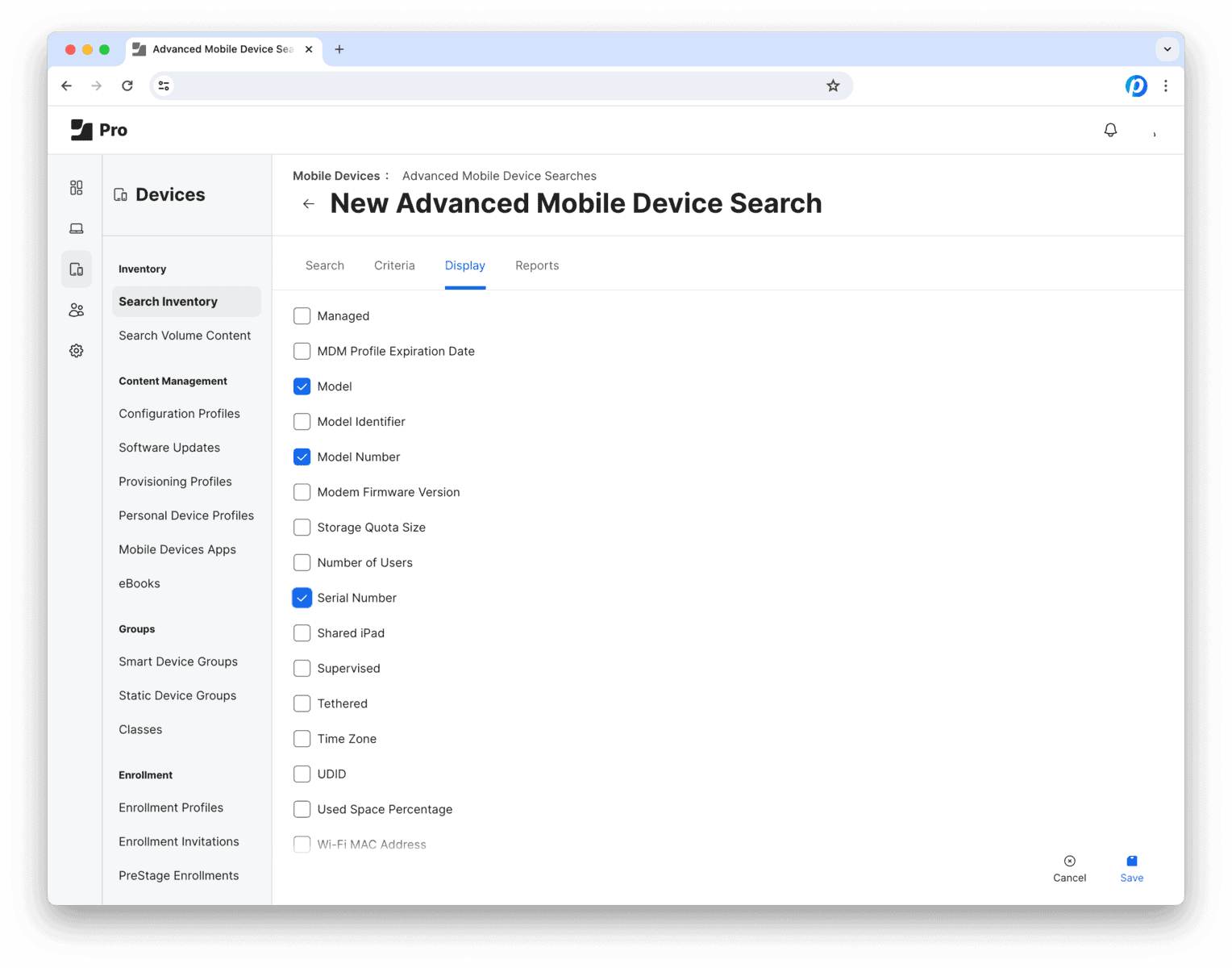
The next view has 4 tabs: Search Criteria Display Reports
2. Search tab
Save and name this Advanced Search for future use or reference.
Then move on to the next tab…
3. Criteria tab
Here is where we set the rules to define which devices should be included in Search Report. For example, you can use attributes like model, management status, location, ownership or any other inventory criteria.
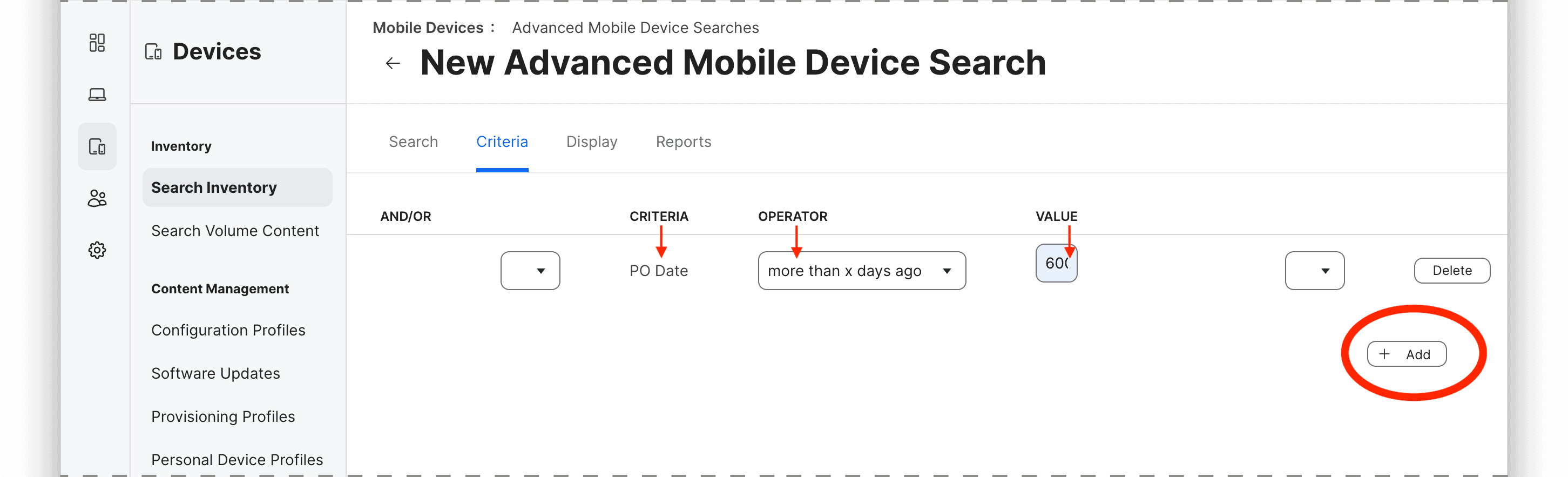
To add a criterion, click on the “+ Add” button and select the attribute, operator, and value for the rule.
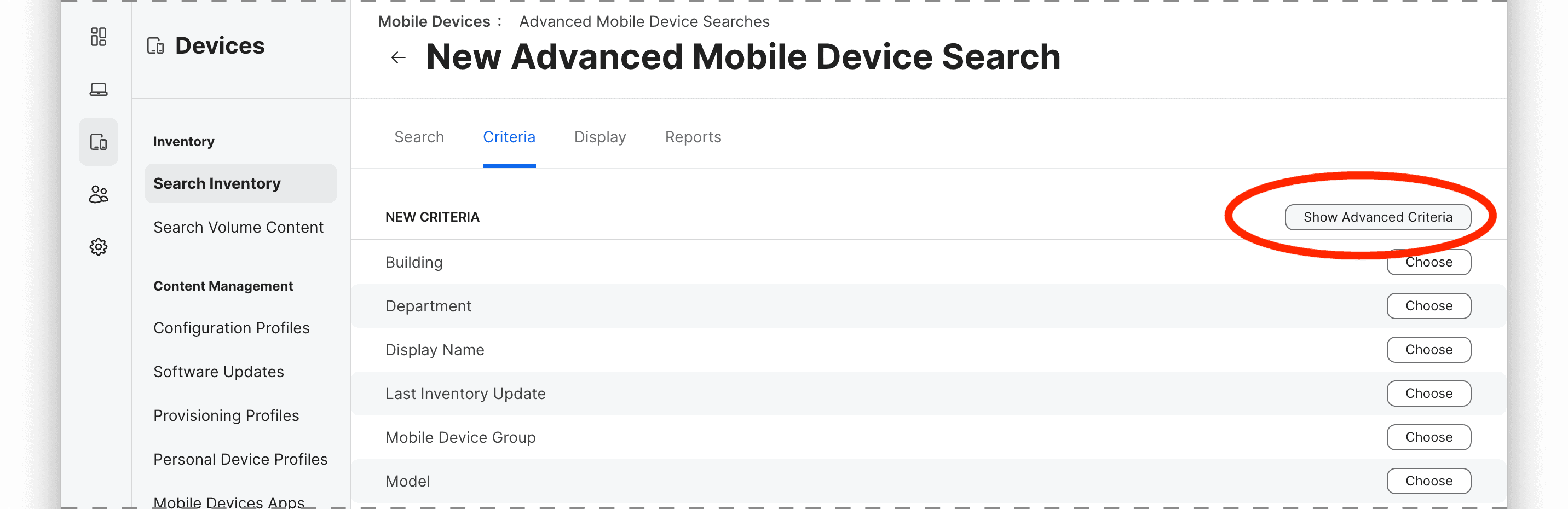
The most common criteria (i.e. “Model”) are listed by default, so to select specific parameters such as device age by purchase date (i.e. “PO Date”), ownership, Activation Lock, Carrier Network, lease status, etc. you may need to select “Show Advanced Criteria.”
In this example, we’ll look for devices that were purchased over 600 days ago, so the rule would be
criteria: PO Date
operator: more than x days ago
value: 600
You can add multiple criteria to narrow down the group using “All” or “Any” logic to determine whether all or any of the criteria must be met for a device to be included in the results.