
Most companies don’t have a feedback problem.
They have an execution problem.
They ask for input, collect it across multiple channels, and genuinely want to understand what their partners and customers need.
But what happens next is where things break down.
In many cases, that feedback gets documented, discussed, and added to a backlog. Over time, it competes with other priorities—and eventually, it stalls.
That’s where the gap is.
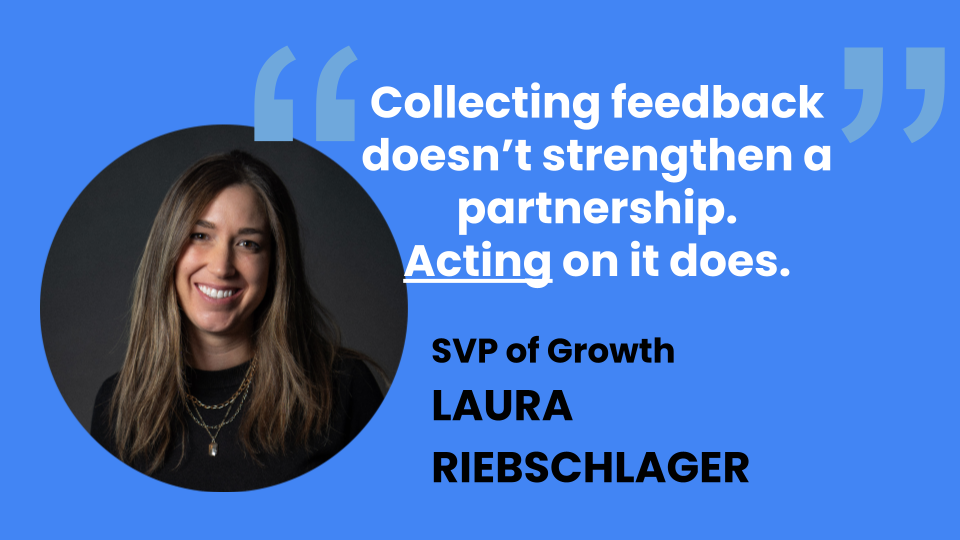
Because collecting feedback doesn’t strengthen a partnership.
Acting on it does.
We’ve made it a habit to ask for feedback constantly, not just in formal settings, but in real conversations with partners and customers. What’s slowing you down? What’s frustrating your team? What’s getting in the way of growth?
But the difference isn’t that we ask. It’s that we act on what we hear.
Some of the most meaningful improvements we’ve made have come directly from these conversations.
One example is data erasure certificates. Partners consistently told us that while these were critical for compliance and reporting, managing them was more difficult than it should be. Teams had to request them, track them down, and store them manually, creating unnecessary friction in an otherwise straightforward process.
So we simplified it. We built data erasure certificates directly into our business portal, giving partners a single place to access them whenever they need them—no extra steps, no chasing.
We saw a similar pattern on the customer side. Many customers trading in laptops didn’t have a box to safely ship their device. Shipping kits addressed that issue, but introduced another: waiting. That delay added friction and, in many cases, reduced completion rates.
Instead of optimizing the existing process, we rethought it. We introduced a boxless drop-off experience through UPS and Happy Returns locations, allowing customers to complete their trade-in without needing packaging or waiting for a kit to arrive. In doing so, we reduced the time to complete a trade-in by an average of 5 days—removing a key barrier and making the experience significantly easier for customers.
We’ve also heard consistent feedback from retail partners about the realities of in-store environments. During busy periods, store associates don’t always have time to help customers back up and trade in devices at the point of sale. Even when the opportunity is there, the process doesn’t always align with how stores actually operate.
So we’re building toward a better approach. We’re developing a solution that allows customers to start their trade-in online and bring it into the store to complete—reducing friction for both the customer and the associate.
None of these improvements came from internal assumptions alone.
They came from listening closely to real friction points—and then prioritizing them.
And partners can tell the difference.
They know when feedback disappears into a system.
And they know when it shows up in the product.
That’s when the relationship starts to change.
It becomes more collaborative, more invested, and more aligned around growth.
Strong partnerships aren’t built on perfect plans from the start.
They’re built on continuous improvement—and a shared commitment to making things better over time.
If you want to differentiate as a partner, don’t just ask for feedback.
Act on it.
And make sure your partners can see that you did.