
Article
The Upgrade Economy: Why iPhone Launches Are About More Than New Devices
- Trade-in
- Retail
- Market report
Sep 18, 2025 · 7 min read
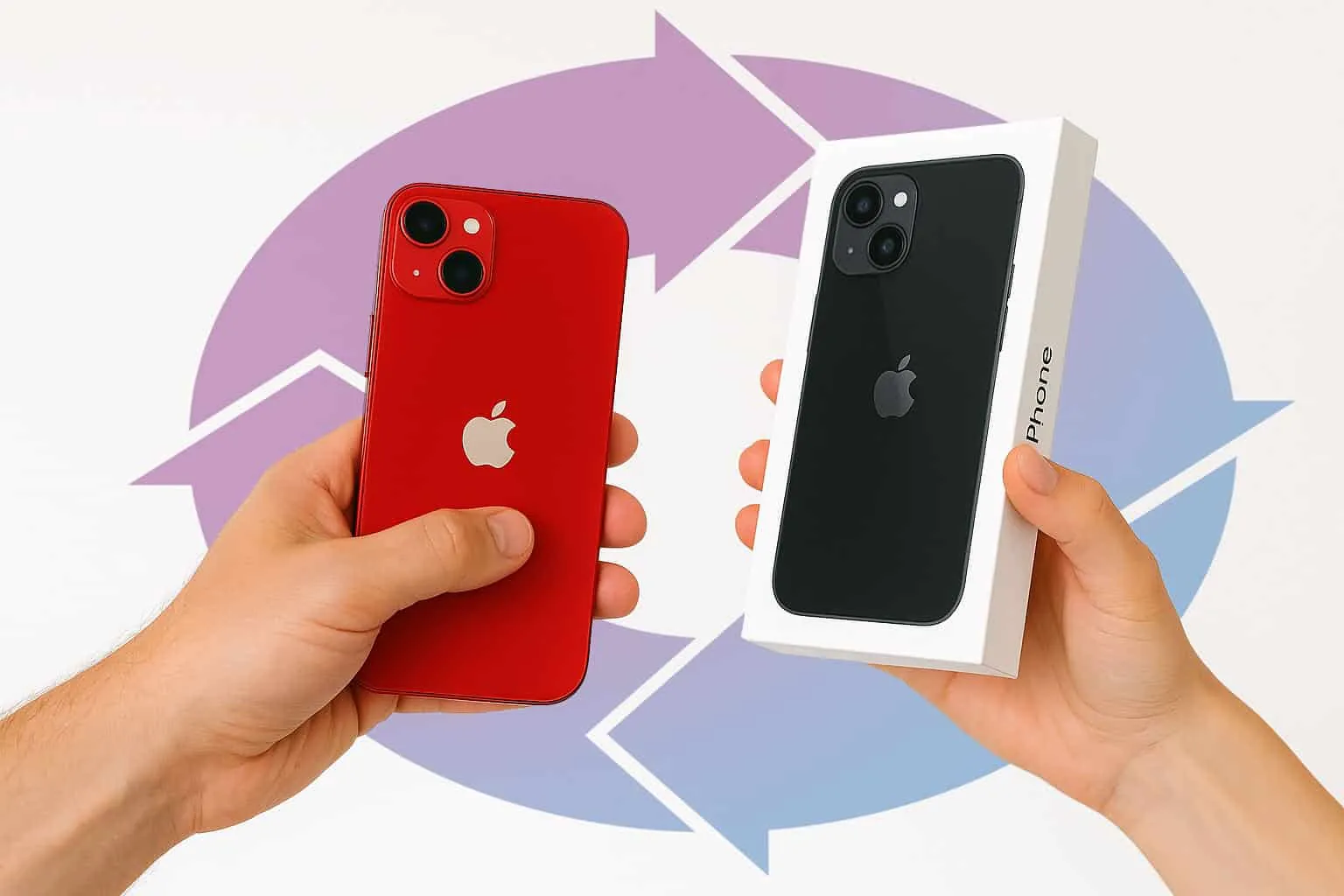
When Apple launches a new iPhone, the impact extends beyond the sale of a new smartphone.
An iPhone launch can accelerate device upgrades, increase trade-in activity, and move inventory through the broader consumer electronics ecosystem. Retailers, carriers, resale platforms, logistics providers, and trade-in programs all participate in the resulting cycle.
I think of this cycle as the upgrade economy: the interconnected market created when consumers replace existing devices, trade in their old technology, and purchase new products.
The launch of a new iPhone is one of the industry's most visible catalysts for that cycle.
What Happens to the Device Market When a New iPhone Launches?
A new iPhone launch can trigger several connected activities:
- Consumers evaluate whether to upgrade.
- Existing devices enter trade-in programs.
- Retailers and carriers promote upgrade offers.
- Trade-in providers receive additional device volume.
- Resellers acquire inventory for the secondary market.
- Logistics networks process increased device movement.
- Refurbished devices can return to the market.
The result is a chain reaction that extends well beyond Apple's initial product sale.
The new device is only the beginning.
The more important question is what happens to the device the customer is replacing.
Why Does an iPhone Launch Trigger Device Upgrades?
A product launch creates a natural decision point for consumers who are already considering replacing an older device.
The decision is not necessarily driven by the newest processor, camera, or other specification.
Consumers may also upgrade because their existing phone:
- Feels slower
- Has declining battery performance
- Has visible wear or damage
- No longer meets their needs
- Is approaching the end of its useful life
- Can be traded in for meaningful value
The new iPhone launch gives consumers a specific moment to act on a decision they may already have been considering.
That makes the launch a behavioral trigger as well as a product announcement.
How Does Trade-In Support the iPhone Upgrade Cycle?
Trade-in reduces the effective cost of replacing a device by assigning value to the customer's existing technology.
For example, consider a hypothetical $999 smartphone with a $250 trade-in value.
The customer's effective purchase cost becomes:
$999 − $250 = $749
The trade-in does not change the retail price of the new phone. Instead, it gives the customer another source of purchasing power.
That can make an upgrade feel more financially accessible.
For retailers and carriers, trade-in can therefore become an important part of the upgrade journey rather than a separate service that happens after the purchase.
Why Is Trade-In Important During a New iPhone Launch?
Trade-in is important during an iPhone launch because it connects device replacement with device recovery.
Without trade-in, the customer purchases a new phone and is left to decide what to do with the old one.
With trade-in, the two transactions can become part of a single journey:
Old device → Trade-in value → New device
That connection can reduce friction around upgrading while creating a supply of used devices for the secondary market.
For the ecosystem, that means an iPhone launch can simultaneously create demand for new devices and supply for used-device markets.
How Does an iPhone Launch Affect the Secondary Device Market?
A new iPhone generation can increase the availability of previous-generation devices in the secondary market.
When consumers upgrade, their previous phones may enter:
- Trade-in programs
- Resale marketplaces
- Refurbishment channels
- Donation programs
- Recycling streams
The resulting inventory can provide additional supply for consumers who want lower-cost devices.
This creates an important relationship between the primary and secondary markets:
New-device demand can generate used-device supply.
That relationship is a fundamental part of the upgrade economy.
What Happens Behind the Scenes During an iPhone Launch?
The consumer sees a new phone.
The broader industry sees a coordinated increase in activity across multiple systems.
Retailers
Retail teams prepare for increased upgrade conversations and make trade-in part of the purchasing experience.
Carriers
Carriers can coordinate upgrade eligibility, device financing, and trade-in offers around the launch cycle.
E-commerce Platforms
Online retailers can integrate trade-in directly into product discovery and checkout.
Trade-In Providers
Trade-in providers prepare for higher volumes of device intake, valuation, processing, and customer communication.
Resellers and Refurbishers
Secondary-market operators prepare for increased availability of previous-generation devices.
Logistics Providers
More devices moving into and out of the ecosystem creates additional requirements for shipping, receiving, processing, and fulfillment.
The launch therefore functions as a system-wide event, not simply a product release.
Why Does Trade-In Infrastructure Matter During an iPhone Launch?
High-volume upgrade periods can expose weaknesses in trade-in infrastructure.
If a program cannot efficiently handle increased volume, customers may encounter:
- Delayed valuations
- Slow device processing
- Unclear communications
- Payment or credit delays
- Customer-service issues
- Inventory bottlenecks
That matters because the customer doesn't necessarily distinguish between the retailer, carrier, trade-in provider, and logistics operation.
The customer experiences the entire upgrade journey as one process.
A successful upgrade economy therefore requires more than attractive trade-in values. It requires infrastructure capable of delivering the promised experience at launch-scale volume.
How Does Trade-In Support the Circular Economy?
Trade-in can connect device upgrades with technology reuse.
When an eligible device is traded in, it may be:
- Resold
- Refurbished
- Reused
- Recycled when reuse is no longer practical
Keeping usable devices in circulation can extend their productive lives and reduce the need for every replacement to require a newly manufactured device.
The environmental impact depends on what happens to the device after trade-in. A device that is successfully reused has a different lifecycle outcome from one that cannot be economically or technically refurbished and is ultimately recycled.
That's why device disposition is an important part of the sustainability equation.
How Does Device Reuse Affect Sustainability?
Device reuse can reduce the need for new production by extending the useful life of existing technology.
Manufacturing electronics requires raw materials, energy, transportation, and other resources. When a functional device can serve another user rather than being immediately discarded, some of those impacts can potentially be avoided.
At scale, the relationship between trade-in, reuse, refurbishment, and recycling becomes an important component of the circular electronics economy.
Trade-in therefore has two connected functions:
Economic: It helps customers recover value from existing devices.
Environmental: It can help keep usable technology in circulation for longer.
Why Is an iPhone Launch Important for Retailers and Carriers?
For retailers and carriers, an iPhone launch represents an opportunity to connect acquisition, upgrade, and device disposition.
Trade-in can be integrated into the customer journey rather than treated as an independent transaction.
That creates a value loop:
Customer owns device → Customer trades in device → Customer receives value → Customer upgrades → Old device enters secondary market → Another customer acquires device
The same device can therefore participate in multiple commercial transactions over its lifetime.
What Does the Upgrade Economy Mean for Brands?
The upgrade economy changes how brands should think about the device lifecycle.
The objective isn't simply to sell the newest device.
Brands and retailers also need to consider:
- What happens to the customer's previous device?
- How easy is it to trade in?
- How quickly can trade-in value be delivered?
- Where does the device go afterward?
- Can it be refurbished and resold?
- How does the experience affect future upgrades?
These questions connect customer experience, revenue, device recovery, and sustainability.
How Can Brands Prepare for an iPhone Launch?
Brands, retailers, carriers, and trade-in providers can prepare by treating launch planning as an ecosystem exercise.
Key areas include:
- Forecast trade-in volume. Estimate how many customers may enter the upgrade cycle.
- Prepare valuation infrastructure. Make sure device identification and pricing can support increased demand.
- Optimize the customer journey. Make trade-in easy to discover and complete.
- Prepare logistics capacity. Plan for increased device intake and movement.
- Coordinate communications. Set clear expectations about valuation, shipping, processing, and payment.
- Plan device disposition. Determine how recovered devices will be reused, refurbished, resold, or recycled.
The goal is to make the trade-in experience feel like a natural part of the upgrade rather than an additional task.
What Is the Upgrade Economy?
The upgrade economy is the interconnected cycle in which consumers replace existing technology, recover value through trade-in or resale, purchase new devices, and return older devices to the secondary market or recycling ecosystem.
An iPhone launch can act as a catalyst for this cycle because it creates a highly visible moment for consumers to reconsider their existing devices.
The new iPhone gets the attention.
But the economic activity surrounding the device customers replace is what makes the upgrade cycle much larger than a single product launch.
Why Is the Upgrade Economy Becoming More Important?
As smartphones and other consumer electronics become increasingly expensive and sophisticated, the value of the existing device becomes an increasingly important part of the upgrade decision.
Trade-in helps bridge the gap.
Customers can recover value from technology they already own. Retailers and carriers can integrate that value into the purchase journey. Secondary-market operators gain inventory. And usable devices can potentially remain in circulation rather than immediately becoming waste.
That creates an ecosystem in which new-device sales and used-device recovery are connected rather than separate markets.
What Does the Future of the Upgrade Economy Look Like?
The future of device upgrades will depend on more than the specifications of the next smartphone.
It will also depend on how effectively the industry manages everything that happens before and after the purchase.
The brands that understand the full device lifecycle can connect:
Upgrade → Trade-In → Recovery → Reuse → Resale → Next Upgrade
That's the upgrade economy.
An iPhone launch is not just about what's new.
It's about everything that comes next.
If you're upgrading your phone, you can trade in your old device through Phobio's direct trade-in program.

Eric Attanasio
Chief Product Officer
Eric Attanasio is Chief Product Officer at Phobio, where he leads product strategy and platform development for large-scale consumer and enterprise trade-in programs. His focus is device lifecycle technology, trade-in platforms, and secondary-market economics.