
Article
Trade-In: The Untapped Growth Engine for Retailers This Holiday Season
- Trade-in
- Retail
- Sustainability
Eric Attanasio
Oct 24, 2025 · 8 min read
Holiday shopping is entering a more value-conscious era. Consumers are budgeting carefully, looking for ways to stretch their spending, and prioritizing purchases that feel worthwhile.
For retailers, that creates an important question:
How can retailers give customers more purchasing power without relying entirely on deeper discounts?
One answer is device trade-in.
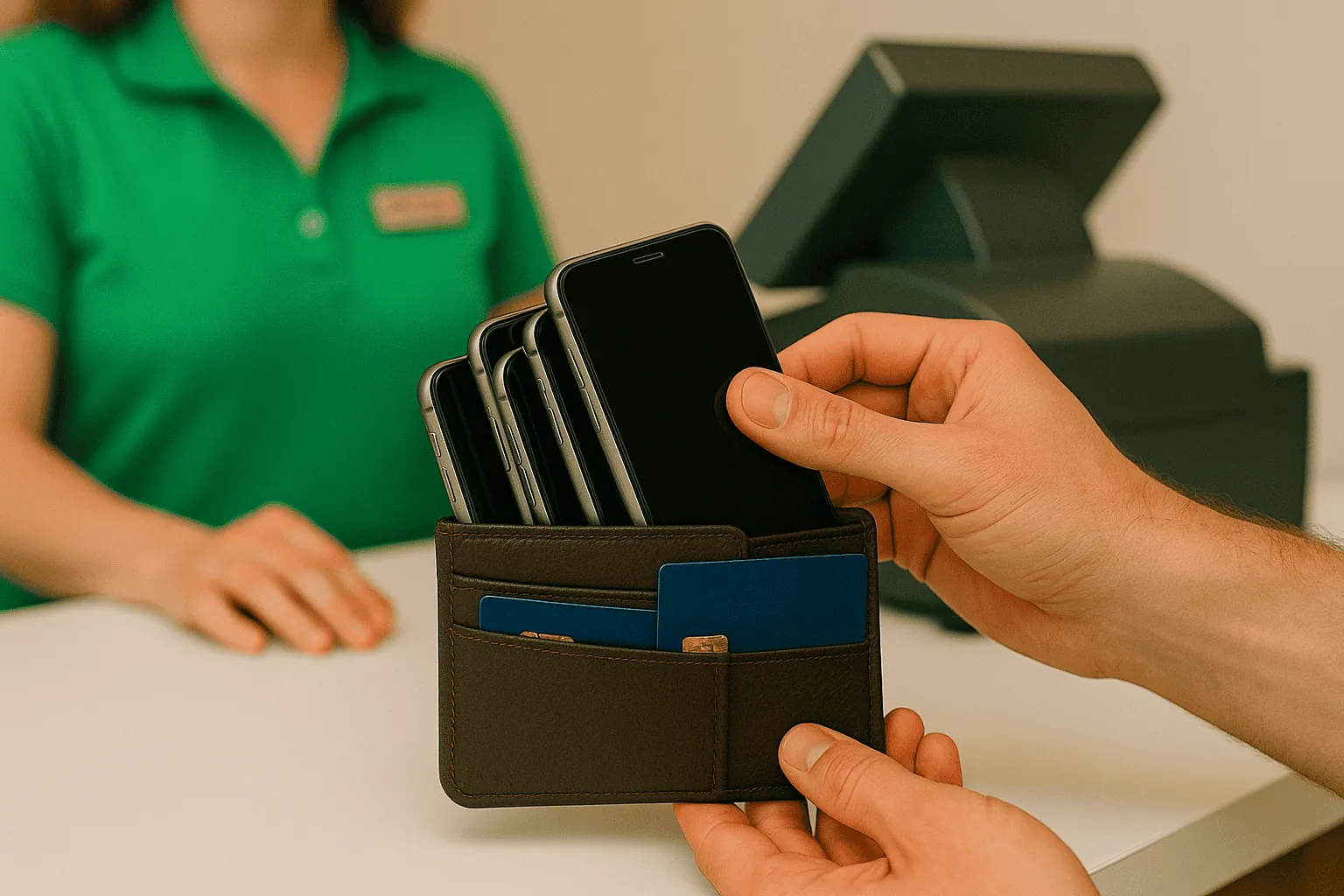
A well-designed trade-in program allows customers to turn unused smartphones, tablets, laptops, wearables, and other electronics into store credit or digital gift cards. That gives shoppers additional spending power while creating another reason to return to the retailer.
At Phobio, we see trade-in as more than a sustainability initiative or operational service. It can function as a value engine that connects customer acquisition, purchasing power, loyalty, and device reuse.
How Can Retailers Use Trade-In to Increase Holiday Sales?
Retailers can use trade-in programs to give customers immediate value for devices they already own and encourage them to spend that value within the retailer's ecosystem.
The basic model is straightforward:
Unused device → Trade-in value → Store credit or digital gift card → New purchase
Instead of asking customers to find additional money in their holiday budgets, retailers can help them unlock value from an asset they already own.
That changes the role of trade-in.
It is no longer simply a way to dispose of an old device.
It becomes another source of purchasing power.
Why Does Trade-In Matter During the Holiday Shopping Season?
Holiday shoppers are particularly sensitive to value because many are balancing multiple purchases against a fixed budget.
Consumers may be buying new phones, computers, tablets, wearables, gifts, and other seasonal items at the same time.
Trade-in gives retailers another way to address that constraint.
A customer who has an unused smartphone sitting in a drawer may not think of that device as part of their holiday budget. A trade-in program changes the equation by assigning a monetary value to it.
That can create a simple psychological and financial transition:
“I have an old device” becomes “I have additional money to spend.”
For retailers, that creates an opportunity to connect device recovery directly to holiday purchasing.
How Does a Trade-In Program Turn Old Devices Into Spending Power?
A trade-in program evaluates an existing device and provides the customer with value based on factors such as its model, condition, and market demand.
That value can then be issued through the retailer's preferred incentive structure, such as:
- Store credit
- Digital gift cards
- Promotional credit
- Other retailer-specific incentives
When the value is issued within the retailer's ecosystem, the trade-in can become the beginning of another transaction.
The customer gets value from something they were no longer using.
The retailer gets another opportunity to sell.
The device enters a secondary-market pathway where it may be resold, refurbished, reused, or recycled depending on its condition and market value.
That is the value loop trade-in can create.
Does Trade-In Actually Drive Additional Customer Spending?
Trade-in can encourage customers to spend beyond the value of the device they submit, although the results depend on the retailer, program design, product mix, and customer behavior.
At Phobio, our internal program data has shown that trade-in value issued through participating retail programs is spent back within the retailer ecosystem. We have also observed customers spending additional money beyond the value of their trade.
For example, in Phobio's observed program data, customers have spent an average of $28 beyond their trade-in value per transaction.
That figure is a Phobio-specific observation, not a universal retail benchmark.
The broader point is important: trade-in can create purchasing power without requiring the retailer to simply lower the price of the product being purchased.
How Does Trade-In Compare With Traditional Discounts?
A traditional discount reduces the price of a purchase, while trade-in creates value by converting an existing customer asset into purchasing power.
That distinction matters.
A retailer offering a blanket discount absorbs the cost of the discount across eligible purchases.
A trade-in program takes a different approach:
Existing asset → recovered value → targeted incentive → new purchase
The customer receives an economic benefit, but the transaction also creates an opportunity to recover value from the retired device.
That can make trade-in a useful complement to, rather than a replacement for, traditional holiday promotions.
How Does Trade-In Build Customer Loyalty?
Trade-in can support customer loyalty by giving customers a reason to re-engage with a retailer when they are ready to replace or upgrade a device.
A trade-in program creates a natural lifecycle relationship:
- A customer purchases a device.
- The customer uses it over time.
- The device becomes eligible for trade-in.
- The retailer offers value for the device.
- The customer uses that value toward another purchase.
- The retailer has another opportunity to serve that customer.
This creates a recurring interaction instead of a single transaction.
The customer is rewarded for returning an existing device, while the retailer creates another opportunity to sell.
In this way, trade-in can turn device replacement into a loyalty touchpoint.
Can Trade-In Increase Average Order Value?
Trade-in can contribute to higher purchase values when customers use their trade-in credit toward a purchase that costs more than the value of the device they submitted.
Consider a simple example.
A customer receives $300 in trade-in value and applies it toward a $500 purchase.
The trade-in covers part of the purchase, while the customer contributes the remaining $200.
The retailer has therefore converted an unused device into purchasing power while still generating a transaction above the trade-in amount.
The actual economics vary by program, but the mechanism is straightforward:
Trade-in value can reduce purchase friction without necessarily limiting the customer to a purchase equal to the value of the trade.
How Are Retailers Using Trade-In to Create a Value Loop?
Retailers can design trade-in programs so that value moves through the ecosystem rather than stopping when a customer receives a trade-in quote.
The loop can look like this:
Recover → Reward → Re-engage → Sell → Recover again
The retailer recovers an existing device.
The customer receives value.
That value encourages another purchase.
The retailer creates a new customer interaction.
Eventually, the newly purchased device may also become eligible for trade-in.
Trade-in therefore has the potential to become a recurring part of the customer lifecycle rather than a one-time promotional event.
How Does Trade-In Support Retail Sustainability?
Trade-in can support sustainability by creating pathways for used devices to remain in circulation through reuse, refurbishment, or resale. Devices that are no longer suitable for reuse can be directed toward responsible recycling.
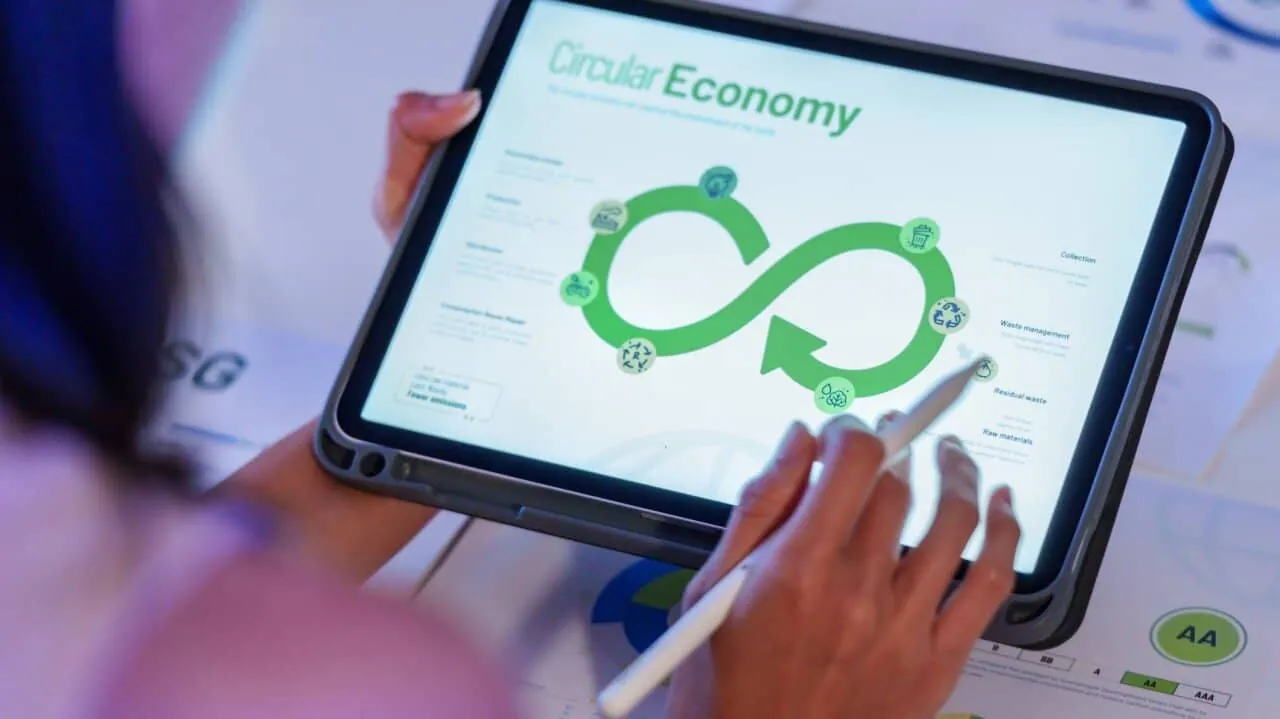
This gives retailers a way to connect commercial activity with the circular economy.
A device sitting unused in a drawer has little practical value to its owner.
A structured trade-in program can give that device another potential use.
The process can look like:
Consumer → Trade-in → Evaluation → Reuse, resale, refurbishment, or recycling
That means the same transaction can create both economic and environmental value.
Importantly, retailers should measure actual disposition outcomes rather than assuming every traded-in device is automatically reused.
Why Is Trade-In More Than a Sustainability Program?
Trade-in is more than a sustainability program because it can simultaneously address customer value, retail sales, loyalty, and device recovery.
From a product perspective, that makes trade-in a behavioral and financial mechanism.
Customers are motivated by the value of something they already own.
Retailers gain an opportunity to bring customers back into the purchasing cycle.
And the device itself can enter a secondary-market or recycling pathway.
That creates several connected outcomes:
- More purchasing power for consumers
- Another customer engagement opportunity
- Potential incremental sales
- Recovery of residual device value
- A pathway for technology reuse
- A measurable circularity initiative
The strength of the model comes from the fact that these outcomes can reinforce one another.
How Can Retailers Launch a Trade-In Program Quickly?
Modern trade-in platforms can allow retailers to launch programs without building the entire device valuation, logistics, inspection, and resale infrastructure internally.
A technology-enabled program can integrate into existing eCommerce and retail workflows through capabilities such as:
- Online device valuation
- Automated device identification
- Condition assessment
- Digital customer communications
- Reverse logistics
- Data security and erasure
- Device processing
- Resale and recycling
- Reporting and analytics
API-driven and white-label solutions can also allow retailers to incorporate trade-in into an existing branded customer experience.
The goal is to make trade-in feel like a natural part of the purchase journey rather than a separate operational process.
How Can Retailers Make Trade-In Part of the Holiday Customer Journey?
The timing of the offer matters.
Retailers can connect trade-in to moments when customers are already thinking about spending, upgrading, or finding additional value.
Examples include:
New-Device Launches
When a new smartphone, laptop, tablet, or wearable launches, customers are already evaluating whether to upgrade.
Trade-in gives them a way to offset the cost.
Holiday Promotions
Trade-in can complement seasonal offers by giving customers another source of purchasing power.
Gift Shopping
Customers can trade in unused technology and use the resulting value toward gifts or other purchases.
Post-Holiday Upgrades
After the holidays, newly received devices can create another wave of trade-in activity as consumers replace older technology.
The most effective strategy is to treat trade-in as part of the customer lifecycle rather than limiting it to a single promotional period.
What Makes Trade-In a Strategic Retail Growth Tool?
Trade-in becomes a strategic growth tool when retailers connect device recovery to customer spending, loyalty, and long-term lifecycle engagement.
That is fundamentally different from treating trade-in as a standalone sustainability initiative.
A strategic program answers four questions:
How do we create value for the customer?
Trade-in converts an unused device into purchasing power.
How do we create another sales opportunity?
The customer can apply that value toward a new purchase.
How do we strengthen the customer relationship?
Trade-in creates a reason to re-engage when a device reaches the end of its useful lifecycle.
How do we keep technology in circulation?
Recovered devices can enter appropriate reuse, resale, refurbishment, or recycling channels.
When those pieces work together, trade-in becomes part of the retailer's broader value proposition.
Why Does Trade-In Matter for Retailers Right Now?
Retailers are operating in an environment where customers are increasingly focused on value.
That makes the question less about how much can a retailer discount? and more about how much value can a retailer create?
Trade-in offers one answer.
It allows customers to unlock value from something they already own while giving retailers another opportunity to generate a purchase, strengthen engagement, and participate in the circular economy.
In a season where every dollar matters, helping customers turn unused technology into purchasing power can benefit both sides of the transaction.
The future of holiday retail won't be defined only by the size of a discount.
It will increasingly depend on how effectively retailers can create value throughout the customer lifecycle.
Trade-in is one way to turn an old device into a new opportunity—for the customer, the retailer, and the next owner of that technology.

Eric Attanasio
Chief Product Officer
Eric Attanasio is Chief Product Officer at Phobio, where he leads product strategy and platform development for large-scale consumer and enterprise trade-in programs. His focus is device lifecycle technology, trade-in platforms, and secondary-market economics.