
Article
Building for Circularity: Designing a Platform That Moves Devices to Their Next Best Life
- Trade-in
- Sustainability
- Retail
Aug 22, 2025 · 8 min read
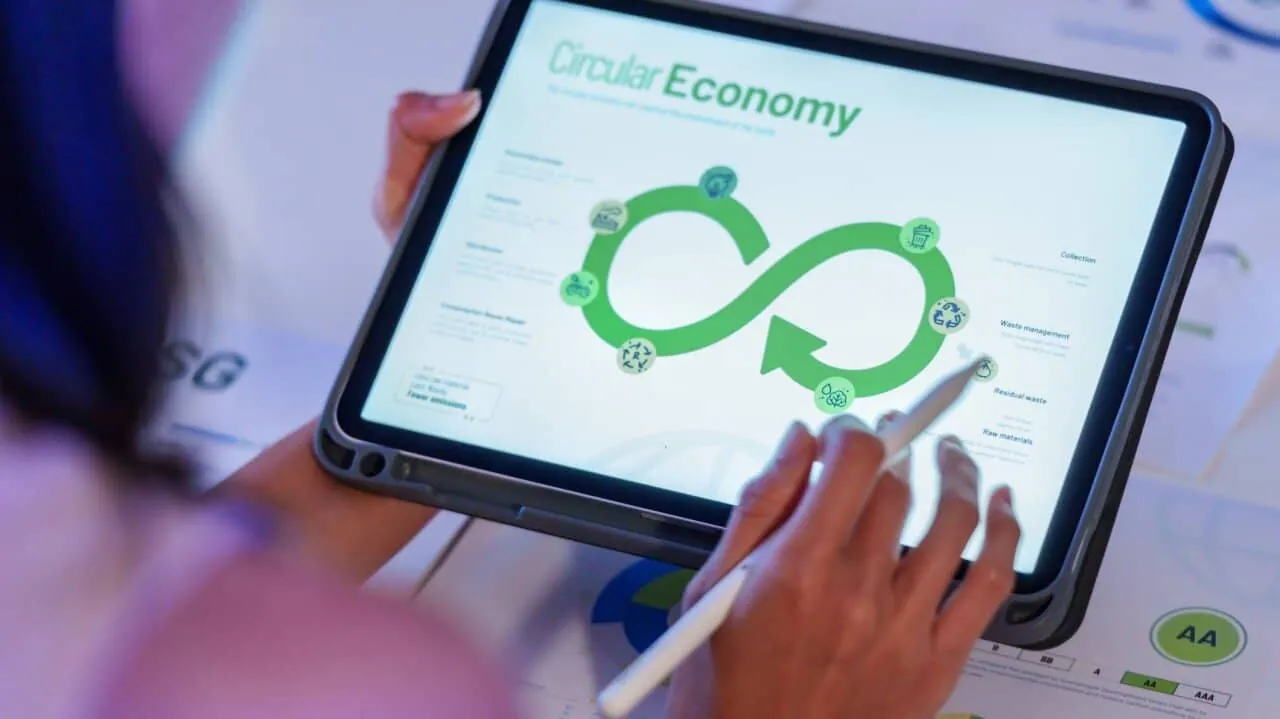
A circular technology ecosystem extends the useful life of devices by connecting trade-in, reuse, resale, repair, and responsible recycling. At Phobio, we see trade-in as the entry point to that ecosystem—not the end of the process.
When I think about what we're building at Phobio, it's not just a trade-in platform. It's a circular technology engine designed to keep devices in motion, preserve residual value, and reduce the environmental impact associated with electronics.
Every product decision, workflow, and partnership is built around the same objective: helping devices find their next best use while creating value for businesses, consumers, and the secondary market.
What Is a Circular Technology Ecosystem?
A circular technology ecosystem is a system that keeps devices and their components in productive use for as long as possible through reuse, refurbishment, resale, repair, and recycling.
Instead of treating a device as a linear product with a beginning and an end, a circular model creates multiple opportunities for that device to generate value throughout its lifecycle.
The basic model looks like this:
Purchase → Use → Trade-In → Evaluation → Reuse, Resale, Repair, or Recycling → Next Use
Trade-in is an important transition point because it gives a device a path forward after its original owner is finished with it.
But collecting a device is only the beginning.
What happens after trade-in determines how much economic and environmental value can ultimately be recovered.
How Has Trade-In Evolved Into a Broader Circular Ecosystem?
We've spent more than a decade helping brands build and operate trade-in programs.
What began as a relatively simple way for customers to receive value for older technology has evolved into a broader ecosystem supporting multiple channels, business models, and device lifecycle needs.
Today, trade-in can be integrated into:
- Retail stores
- Ecommerce experiences
- OEM upgrade programs
- Membership and loyalty programs
- Enterprise technology refreshes
- Education device programs
- Bulk buyback programs
The purpose is not simply to collect more devices.
It's to create efficient pathways for devices to move from one owner or use case to another.
How Does Trade-In Work in Retail?
In retail, trade-in can give customers immediate value toward a new purchase while helping retailers create a structured path for the old device.
Retail associates can incorporate trade-in into the sales conversation, allowing shoppers to understand the potential value of a device they're replacing.
That can make the upgrade decision more straightforward:
Old device → Trade-in value → New purchase
The retailer also gains a process for moving the traded device into the secondary market rather than leaving disposition as an isolated operational task.
How Does Online Trade-In Support Ecommerce?
Online trade-in integrates device valuation and recovery into the digital shopping experience.
For OEMs and ecommerce businesses, customers can be introduced to trade-in as part of the upgrade journey.
The basic concept is simple:
Buy a new device while creating a path for the old device to retain value.
This can help customers think about the total economics of an upgrade rather than only the price of the replacement device.
For brands, the trade-in process can become part of a broader customer lifecycle rather than a standalone transaction.
How Do Loyalty and Membership Programs Use Trade-In?
Loyalty and membership programs can use trade-in to convert the residual value of used technology into purchasing power within a brand's ecosystem.
For example, a brand can structure a trade-in program around gift cards or other forms of customer value.
That creates a connection between:
Device recovery → Customer value → Future purchase
The device leaves one lifecycle while the customer remains connected to the brand.
How Does Enterprise Device Buyback Support Technology Refreshes?
Enterprise device buyback helps organizations recover value from retired technology while providing a structured process for device disposition.
Businesses and educational institutions regularly replace laptops, smartphones, tablets, and other technology.
A successful recovery program needs to address more than valuation. It also needs to account for:
- Data security
- Device collection
- Logistics
- Chain of custody
- Asset tracking
- Processing
- Value recovery
- Final disposition
That's why our bulk buyback approach focuses on combining technology, service, and logistics.
For enterprise and education clients, we've developed processes that can include certified data erasure, on-site pickups, and coordinated logistics.
The objective is straightforward:
Make technology recovery secure, measurable, and easier to manage.
What Happens to a Device After Trade-In?
After a device is received, it should be evaluated for its next best use before it is considered for recycling.
This is where the circular ecosystem becomes more important than the initial trade-in transaction.
A device may have several possible destinations.
It could be:
- Resold to another consumer
- Refurbished before resale
- Used for insurance claim fulfillment
- Purchased by a repair business
- Sold into another geographic market
- Used for another application
- Recycled when reuse is no longer viable
The objective is to match each device with the most appropriate next use based on its condition, market demand, and economic value.
What Is Assembly and Why Does Remarketing Matter?
Assembly is Phobio's remarketing platform, designed to help determine how recovered devices can move efficiently into their next market or use case.
We built Assembly because collecting devices isn't enough.
The secondary market has its own operational challenges, including:
- Device grading
- Inventory management
- Buyer behavior
- Market volatility
- Pricing
- Channel management
- Device movement
Assembly was designed around those realities.
By controlling more of the remarketing process, we can work toward greater visibility into where devices go next and how their remaining value can be recovered.
Trade-in creates the inventory. Remarketing creates the pathway to the next use.
Why Does Reuse Matter in Electronics?
Reuse can extend the useful life of electronics and reduce the need to manufacture replacement devices as frequently.
Manufacturing electronics requires raw materials, energy, transportation, and other resources.
Keeping an existing device in productive use can therefore avoid some of the environmental impacts associated with manufacturing a replacement.
For this reason, we prioritize reuse whenever it is technically and economically viable.
The goal isn't simply to keep a device out of a recycling stream.
The goal is to keep a functional device useful for longer.
What Is the Environmental Benefit of Reusing Electronics?
The environmental benefit of reuse comes primarily from extending product life and potentially reducing demand for new-device manufacturing.
The exact environmental benefit varies by device, model, use case, lifetime, geography, and what would otherwise happen to the device.
That's why we view circularity as a lifecycle strategy rather than a single sustainability metric.
A device that can be productively reused has a different environmental pathway from a device that can no longer function and must be recycled.
Both outcomes can be important.
But when reuse is viable, we want the device to keep working.
What Happens When a Device Cannot Be Reused?
When a device is no longer suitable for reuse, responsible recycling can recover materials and provide an appropriate end-of-life pathway.
We work with an R2v3-certified network for recycling and downstream processing.
Devices that cannot be rehomed can be decommissioned and directed through appropriate recycling channels, where recoverable materials can be separated and processed.
This creates a hierarchy of outcomes:
Reuse first → Repair or refurbishment where appropriate → Recycling when reuse is no longer viable
The specific disposition depends on the device's condition and available market pathways.
How Does Phobio Track Devices Through the Recovery Process?
Device tracking and chain-of-custody controls provide visibility into what happens to technology after it enters a recovery program.
That visibility matters because a circular model requires more than good intentions.
Businesses need to understand what happened to their assets.
Consumers need confidence that their devices are handled appropriately.
Partners need reliable information about inventory and disposition.
Our processes can include serialized chain-of-custody tracking and certified data-erasure procedures to help provide that accountability.
Transparency is what turns a circularity claim into an operational process.
Why Is Data Security Important in a Circular Technology Model?
Data security is essential because devices can contain sensitive personal, corporate, or institutional information long after their original owners stop using them.
A device cannot simply be resold because it has market value.
It first needs to be processed appropriately, including data erasure where applicable.
That makes security a foundational part of device recovery—not an additional feature added after the fact.
For us, circularity and security go together:
Recover the device. Protect the data. Recover the value.
How Does Circularity Create Value for Different Stakeholders?
A circular technology ecosystem creates value by connecting different participants around the remaining utility of a device.
For businesses, that can mean recovering value from retired technology.
For consumers, it can mean receiving value for devices they no longer need.
For retailers and brands, it can create a more integrated upgrade and customer-lifecycle experience.
For secondary-market buyers, recovered devices can become inventory for resale, repair, refurbishment, or other uses.
And for the environment, extending device life can reduce the need to treat usable electronics as disposable products.
Each participant plays a different role, but the device continues moving through the ecosystem.
What Does a Circular Technology Model Require?
A circular model requires more than a trade-in form or a recycling box.
It requires infrastructure across the entire device lifecycle.
That includes:
- Intake — making it easy to enter a device into a recovery program.
- Evaluation — determining condition and residual value.
- Secure processing — protecting data and maintaining appropriate chain of custody.
- Remarketing — finding an appropriate secondary-market pathway.
- Reuse or refurbishment — extending the device's productive life when viable.
- Recycling — recovering materials when further reuse isn't practical.
- Measurement and accountability — tracking what happens throughout the process.
That's the difference between collecting used technology and building a circular technology ecosystem.
What Is the Future of Device Trade-In?
The future of device trade-in is broader than the transaction itself. It is the creation of connected systems that manage what happens before, during, and after a device changes ownership.
Trade-in is becoming part of a larger conversation about:
- Device lifecycle management
- Recommerce
- Customer experience
- Residual value
- Data security
- Sustainability
- Secondary-market infrastructure
That means the question is no longer simply, How do we get customers to trade in their devices?
The more important question is:
What happens to those devices next?
At Phobio, that's the problem we're building to solve.
We're building for reuse.
We're building for transparency.
And we're building toward a technology ecosystem where devices continue to move through productive lifecycles, value continues to be recovered, and responsible recycling provides a pathway when reuse is no longer possible.
Trade-in starts the journey. What happens next defines the circular ecosystem.

Eric Attanasio
Chief Product Officer
Eric Attanasio is Chief Product Officer at Phobio, where he leads product strategy and platform development for large-scale consumer and enterprise trade-in programs. His focus is device lifecycle technology, trade-in platforms, and secondary-market economics.