
Article
The MVNO Advantage: How Trade-In Programs Drive Growth in a Competitive Market
- Trade-in
- Buyback
- Market report
Phobio
Nov 7, 2025 · 7 min read
The MVNO market is expanding, but increased competition is making differentiation more important.
One way mobile virtual network operators (MVNOs) can differentiate is by using device trade-in programs to reduce switching friction, support device upgrades, improve customer engagement, and create new opportunities for device resale and circularity.
The global MVNO market includes a wide range of business models, from value-focused wireless providers to brands built around specific customer segments, bundles, or technology experiences.
As more providers compete for the same customers, price becomes only one part of the value proposition.
The more important question is:
Why would a customer leave an existing wireless provider and choose an MVNO instead?
How Can MVNOs Differentiate Themselves?
MVNOs can differentiate through niche positioning, customer experience, service bundles, technology, pricing, and device-related benefits such as trade-in programs.
Established MVNOs have demonstrated several approaches to differentiation.
Some focus on specific customer segments. Others combine wireless service with broader products or services. Still others compete through technology and simplified customer experiences.
Device trade-in adds another potential differentiator.
Instead of selling connectivity alone, an MVNO can use trade-in to participate in the customer's entire device lifecycle:
Acquire → Activate → Use → Upgrade → Trade In → Replace
That creates additional opportunities to engage customers beyond the monthly wireless bill.
What Is a Device Trade-In Program for an MVNO?
An MVNO device trade-in program allows customers to exchange an eligible existing device for monetary value that can be applied toward a new device, service, or other qualifying purchase.
The exact structure varies by provider.
An MVNO can offer trade-in as part of:
- New-customer acquisition
- Device upgrades
- Device financing
- Seasonal promotions
- New-device launches
- Customer retention campaigns
- Refurbished-device programs
The important distinction is that trade-in can connect wireless service with hardware economics.
That can give MVNOs another way to create value without competing solely on monthly plan price.
How Can Trade-In Reduce the Barrier to Switching MVNOs?
Trade-in can reduce the cost of switching by allowing customers to recover value from their existing phone and apply that value toward another device.
The price of a new smartphone can make switching providers more complicated.
A customer may want a different wireless plan but hesitate because switching also means purchasing a new phone.
Trade-in can address part of that problem.
For example:
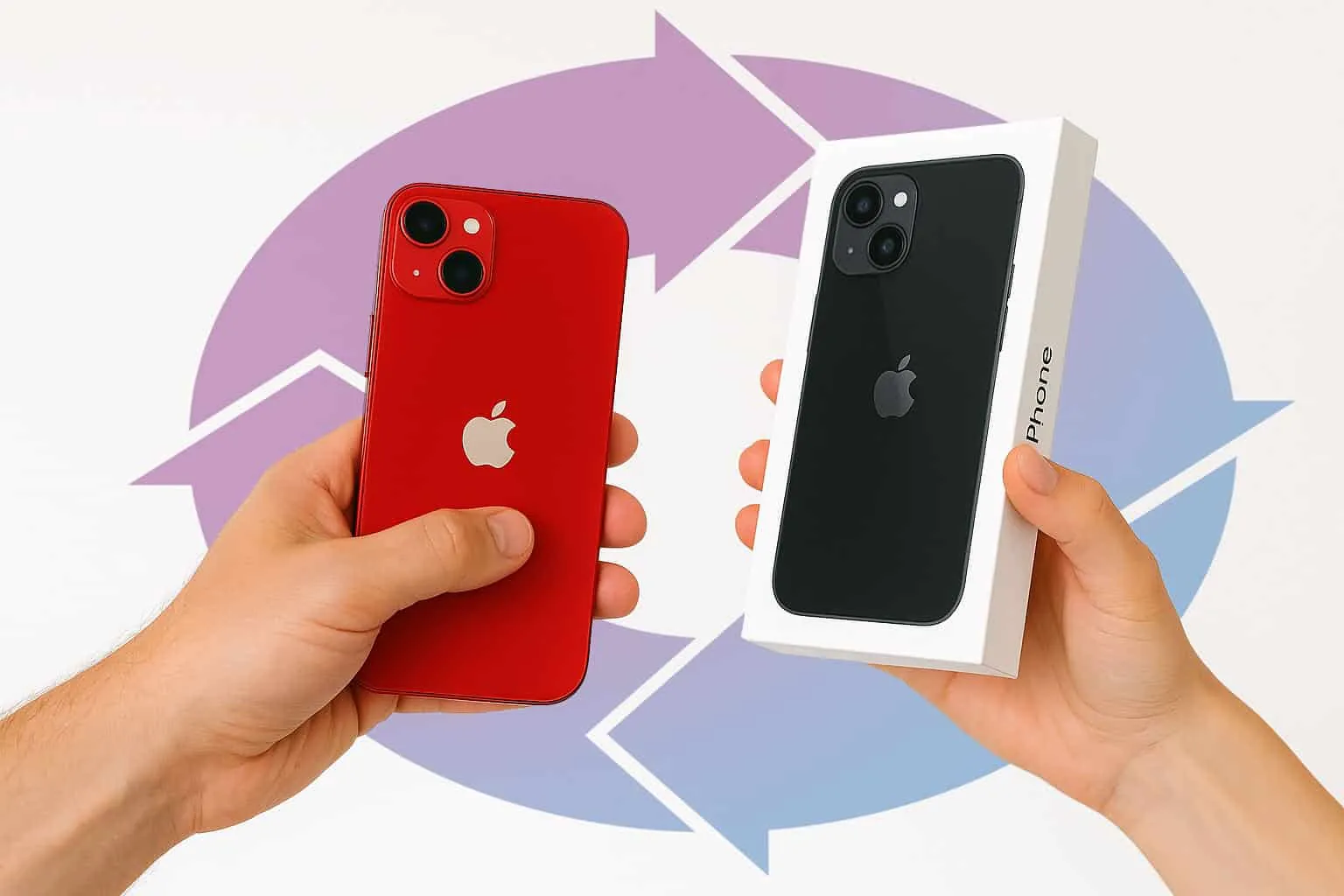
Existing phone → Trade-in value → New compatible device → New MVNO service
Instead of treating the customer's existing device as an obstacle, the MVNO turns it into part of the acquisition journey.
That can be particularly useful when an MVNO wants to move customers from another provider while simultaneously selling a compatible device.
Can MVNOs Use Trade-In to Improve Customer Retention?
Yes. MVNOs can use trade-in programs as part of an upgrade and retention strategy by creating recurring opportunities to engage customers around their devices.
A trade-in transaction naturally creates a customer touchpoint.
When a customer is ready for a new phone, the MVNO can potentially offer:
- A trade-in incentive
- A new-device offer
- Financing options
- An upgraded wireless plan
- Accessories
- A refurbished-device alternative
That turns an otherwise routine hardware replacement into an opportunity for customer engagement.
However, trade-in should not be viewed as automatic “lock-in.”
Its retention value depends on the overall customer experience, the economics of the offer, device financing terms, and the competitiveness of the wireless service.
How Can Trade-In Help MVNOs Sell Devices?
Trade-in can make device sales more accessible by reducing the effective cost of a new device for the customer.
This creates an opportunity for MVNOs that traditionally emphasize connectivity to expand their role in hardware.
An MVNO can potentially combine:
Wireless plan + device + trade-in + financing
That creates a more complete customer proposition.
Trade-in can also support refurbished-device offerings.
Instead of relying exclusively on new hardware, an MVNO can potentially offer certified or professionally refurbished devices at lower price points while participating in the secondary market.
How Can Trade-In Address Device Compatibility?
Trade-in can help MVNOs address device compatibility by pairing customers with devices that meet the network and service requirements of the provider.
Bring-your-own-device programs can be attractive because they allow customers to use hardware they already own.
But BYOD can also introduce complexity.
Customers may not know whether an existing phone is compatible with a particular network or service.
A device-sales strategy gives the MVNO greater control over the hardware experience.
Trade-in can connect the two:
Customer's existing device → Trade-in → Compatible replacement device
This can simplify the transition for customers who want to switch providers but also need new hardware.
How Does Trade-In Create Revenue Opportunities for MVNOs?
Trade-in can create additional economic opportunities by connecting customer acquisition and retention with device resale and recovery.
A recovered device doesn't necessarily lose all of its value when the original customer upgrades.
Depending on its condition, model, market demand, and disposition path, it may be:
- Resold
- Refurbished
- Reused
- Recycled
That residual value can help offset the economics of customer incentives.
For an MVNO, this means a trade-in program can be more than a promotional expense.
It can become part of a broader device lifecycle and recovery strategy.
How Does Trade-In Support Sustainability for MVNOs?
Trade-in can support sustainability by creating pathways for eligible devices to remain in use through resale or refurbishment and by directing devices that are no longer suitable for reuse toward responsible recycling.
This connects wireless service with the circular economy.
When a customer upgrades, the old device doesn't necessarily need to become electronic waste.
A structured trade-in program can help recover devices and materials while creating another opportunity for useful technology to reach the secondary market.
MVNOs can also use device lifecycle reporting to document outcomes such as:
- Devices recovered
- Devices resold or refurbished
- Devices recycled
- Value recovered
- Other applicable circularity metrics
The environmental benefit depends on what happens to each device after recovery, so measurement and responsible disposition are essential.
Can Refurbished Devices Help MVNOs Compete on Value?
Refurbished devices can give MVNOs another way to offer lower-cost hardware while participating in the secondary device market.
Not every customer needs or wants the newest smartphone.
A professionally refurbished device can provide an alternative for customers who prioritize affordability.
For an MVNO, that can create a broader hardware portfolio:
New devices for customers seeking the latest technology + refurbished devices for customers seeking value.
Trade-in can supply part of the inventory needed for that secondary-market model.
How Should an MVNO Launch a Trade-In Program?
An MVNO should design its trade-in program around specific customer journeys, such as new-customer acquisition, device upgrades, seasonal promotions, or hardware launches.
A practical launch strategy can include:
1. Define the Business Objective
Determine whether the primary goal is acquisition, retention, device sales, inventory recovery, or a combination.
2. Identify Eligible Devices
Establish which phones and other devices qualify and how condition affects value.
3. Create a Simple Customer Experience
Make valuation, shipping or drop-off, data protection, and payment easy to understand.
4. Connect Trade-In to Device Sales
Show customers how their existing device can reduce the cost of a replacement.
5. Establish a Recovery and Resale Process
Determine how recovered devices will be evaluated, resold, refurbished, recycled, or otherwise processed.
6. Measure the Results
Track metrics such as trade-in participation, acquisition, retention, device sales, recovered value, and disposition outcomes.
The objective is to make trade-in part of the MVNO's operating model rather than treating it as a one-time promotion.
Should MVNOs Build Trade-In Infrastructure Themselves?
Not necessarily. MVNOs can work with specialized trade-in providers to manage device valuation, logistics, data security, inspection, resale, and reporting.
Building every part of a trade-in operation internally can require significant operational capabilities.
A specialized partner can provide infrastructure for functions such as:
- Device identification and valuation
- Condition assessment
- Customer communications
- Reverse logistics
- Data security and erasure
- Resale
- Recycling
- Reporting
This allows the MVNO to focus on its customer proposition while relying on established infrastructure for the operational components of device recovery.
Why Is Device Trade-In Becoming More Important for MVNOs?
Device trade-in is becoming more relevant as MVNOs look for ways to differentiate beyond wireless pricing and build stronger connections between service, hardware, and customer lifecycle management.
A trade-in program can potentially address several challenges simultaneously:
| MVNO challenge | Potential trade-in role |
|---|---|
| Customer switching friction | Converts an existing device into value toward a replacement |
| Device affordability | Reduces the effective cost of new hardware |
| Customer engagement | Creates an upgrade-related touchpoint |
| Hardware sales | Connects trade-in with device purchases |
| Secondary-market value | Recovers value from retired devices |
| Sustainability | Creates pathways for reuse, resale, and recycling |
| Customer lifecycle management | Connects acquisition, upgrade, and recovery |
The value of trade-in isn't limited to any single one of these areas.
Its strategic value comes from connecting them.
What Does the Future of MVNO Differentiation Look Like?
MVNO differentiation is increasingly about creating a complete customer experience rather than competing on price alone.
Connectivity remains the foundation.
But customers also interact with their wireless provider through devices, upgrades, financing, support, and account management.
That gives MVNOs opportunities to expand the relationship.
Device trade-in is one example.
It connects the customer's old device with the next one while giving the MVNO another opportunity to provide value.
The broader model looks like this:
Connect the customer → provide the device → support the experience → facilitate the upgrade → recover the old device
That's more than a trade-in promotion.
It's a device lifecycle strategy built into the wireless customer relationship.
For MVNOs competing in an increasingly crowded market, the question isn't simply how to offer a lower price.
It's:
What additional value can you provide at every stage of the customer's relationship with your brand?
Device trade-in can be one answer.
Phobio