
Article
How Can SMBs Reduce Technology Costs With Device Trade-In?
- Trade-in
- Business
- Market report
Sep 5, 2025 · 10 min read
SMBs can reduce the net cost of technology refreshes by combining planned device replacement with trade-in programs. Instead of holding laptops and mobile devices until they have little or no residual value, businesses can establish predictable refresh cycles, recover value from existing equipment, and apply that value toward future technology investments.
As Chief Revenue Officer at Phobio, I work with hundreds of SMBs annually that are transforming how they approach technology investment. The most successful ones aren't simply buying new devices. They're building sustainable technology refresh strategies that balance productivity, cash flow, device performance, and return on investment.
Here's why trade-in is becoming an increasingly important part of that strategy.
Why Is Technology Investment a Challenge for SMBs?
SMBs need current technology to support productivity, security, collaboration, and growth, but they also have to manage limited budgets and competing business priorities.
That creates a fundamental challenge:
How do you keep employees equipped with effective technology without continuously increasing the cost of technology ownership?
For many businesses, the answer has traditionally been to purchase devices, keep them for several years, and replace them when they become outdated or expensive to maintain.
A more strategic approach is to manage devices as assets throughout their entire lifecycle.
That means considering not only what a device costs to purchase, but also what it costs to operate, when it should be replaced, and how much value can be recovered when it is retired.
What Is a Strategic Device Refresh Cycle?
A strategic device refresh cycle is a planned schedule for replacing business technology based on factors such as device age, performance, employee needs, security requirements, maintenance costs, and residual value.
Rather than waiting for devices to fail, an SMB can establish a predictable replacement schedule.
A refresh strategy might look like:
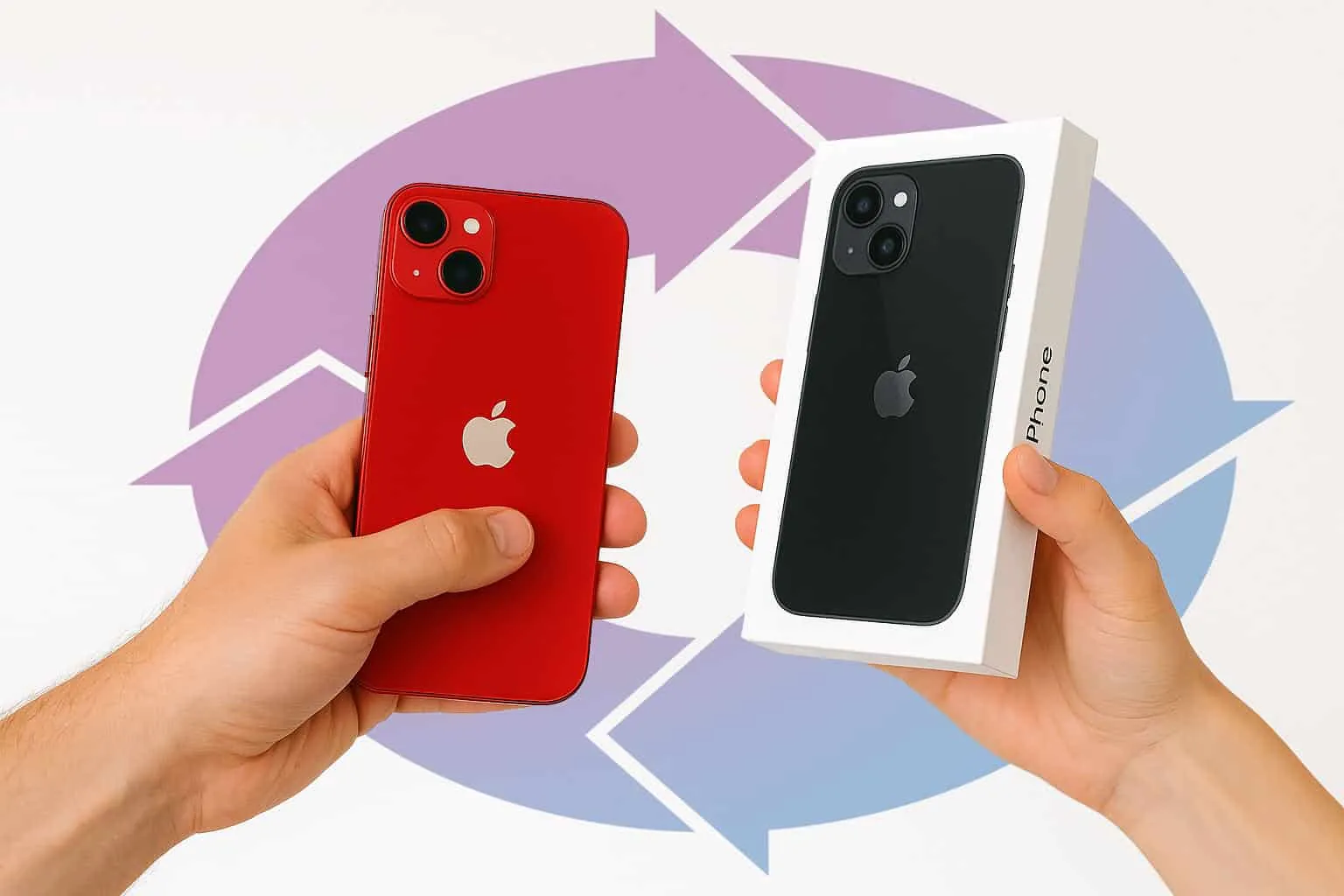
Purchase → Deploy → Manage → Refresh → Trade In → Reinvest
This approach gives IT and finance teams greater visibility into future technology spending.
It also creates an opportunity to recover value from devices before their residual value declines further.
How Does Device Trade-In Reduce Technology Costs?
Device trade-in reduces the net cost of a technology refresh by returning value for eligible devices that a business is replacing.
For example, an SMB purchasing new laptops can trade in its existing equipment rather than simply storing, selling, or disposing of it independently.
The resulting trade-in value can potentially be used to offset the cost of replacement technology.
The financial equation becomes:
New technology cost − trade-in value = net refresh investment
The actual value recovered depends on factors including device model, age, condition, market demand, and disposition channel.
That makes residual value an important variable in technology lifecycle planning.
Why Are Laptops and Mobile Devices Important to SMB Refresh Strategies?
Laptops and mobile devices are among the most important technology assets for modern knowledge workers.
Employees increasingly depend on these devices for:
- Video conferencing
- Communication
- Cloud applications
- Collaboration
- Business applications
- Remote and hybrid work
- AI-enabled tools
As device capabilities evolve, older hardware may not provide the same performance, connectivity, battery life, or capabilities as newer models.
The question for an SMB therefore isn't simply “When should we replace our devices?”
It is:
“When does the productivity and operational value of a new device outweigh the cost of continuing to use the existing one?”
How Often Should SMBs Refresh Business Laptops?
A three-year refresh cycle is a useful planning benchmark for many business laptop fleets, but the appropriate cycle depends on the organization's devices, workloads, support costs, security requirements, and budget.
Some organizations may benefit from shorter cycles, while others may keep devices longer.
The important point is to avoid treating device replacement as an emergency event.
A planned refresh can allow IT and finance teams to consider:
- Current device performance
- Repair and maintenance costs
- Security requirements
- Employee productivity
- New hardware capabilities
- Expected trade-in value
- Budget availability
Trade-in becomes particularly relevant when devices still have meaningful residual value.
Who Makes Technology Investment Decisions at SMBs?
Technology purchasing decisions are increasingly collaborative.
Depending on company size and structure, decision-makers can include:
- IT leaders, who evaluate performance, security, compatibility, and lifecycle requirements
- CFOs and finance teams, who evaluate costs, budgets, cash flow, and return on investment
- CEOs and business leaders, who evaluate how technology investments support broader business objectives
A trade-in strategy can connect these priorities.
IT gets a structured way to manage device replacement.
Finance gets a mechanism for recovering residual value.
Business leaders get greater visibility into the long-term cost of technology ownership.
What Is the Business Opportunity in Device Trade-In?
Device trade-in creates value because business technology does not necessarily become worthless when an employee stops using it.
A laptop or smartphone that is no longer appropriate for one employee may still have value in a secondary market.
That value can come from:
- Reuse
- Refurbishment
- Resale
- Parts recovery
- Recycling
A professional device lifecycle strategy attempts to capture the appropriate residual value at each stage.
The opportunity is therefore not simply to buy technology more efficiently.
It is to manage the entire lifecycle of the technology investment.
How Does Trade-In Improve SMB Cash Flow?
Trade-in can provide a source of value recovery when businesses refresh technology.
Instead of treating device replacement as a one-way expense, an SMB can model the expected residual value of existing assets as part of its refresh planning.
For example:
Original device investment → Device use → Trade-in → Value recovery → New-device investment
This can make refresh spending more predictable and reduce the net amount required to purchase replacement equipment.
However, trade-in values are not guaranteed unless a specific program or agreement provides that guarantee. Businesses should model expected residual values using current market data and conservative assumptions.
Can Trade-In Improve the ROI of Technology Refreshes?
Trade-in can improve the financial economics of a refresh by reducing the net cost of replacement devices.
But the full ROI calculation should go beyond the trade-in check.
An SMB should consider:
Total cost of ownership + productivity + maintenance + security + residual value
For example, a newer device may provide benefits through improved performance or reduced support requirements, while an older device may become increasingly expensive to maintain.
The right refresh decision therefore depends on the organization's specific workforce, hardware, applications, and operating costs.
How Does Device Age Affect Employee Productivity?
Outdated technology can create friction for employees through slower performance, compatibility issues, reliability problems, and limitations with newer applications.
Research cited in the original analysis suggests that employees can experience meaningful productivity effects from technology upgrades. Those findings should be evaluated in the context of the study methodology, employee population, device types, and upgrade cycle before being applied broadly to an SMB fleet.
The strategic takeaway is simpler:
Device refresh decisions should account for employee productivity—not just hardware cost.
If employees depend on their devices throughout the workday, the cost of keeping an underperforming device may extend beyond IT's maintenance budget.
How Can SMBs Use Trade-In to Support AI Investments?
AI capabilities are becoming another consideration in device-refresh decisions.
Newer hardware may support capabilities that older devices cannot handle as effectively, particularly as software and AI workloads evolve.
Trade-in can help address the financial side of that transition by reducing the net cost of replacing existing equipment.
The strategy is:
Retire older hardware → Recover residual value → Reinvest in newer capabilities
This can allow SMBs to evaluate new technology investments based on their business requirements rather than treating every upgrade as a completely new expense.
How Should SMBs Calculate the Value of a Trade-In Program?
SMBs should compare their current device lifecycle strategy with a planned refresh-and-trade-in model.
At minimum, the analysis should include:
- Current device inventory — What devices does the company own?
- Device age — How old is each asset?
- Condition — Which devices remain suitable for secondary use?
- Replacement cost — What will new equipment cost?
- Residual value — What could existing devices reasonably return?
- Maintenance costs — How much does it cost to keep older devices operational?
- Productivity considerations — What is the business impact of outdated equipment?
- Disposition costs — What does the organization spend to process retired technology?
This creates a more complete view of total cost of ownership.
What Should SMBs Do Before Launching a Trade-In Program?
SMBs can begin with five practical steps.
1. Audit the Current Device Fleet
Create an inventory of laptops, smartphones, tablets, and other business technology.
Record model, age, condition, ownership, and current user.
2. Identify the Current Refresh Cycle
Determine when devices are typically replaced and why.
Are devices being replaced according to a plan, or only when they fail?
3. Estimate Residual Value
Obtain current trade-in estimates for eligible equipment.
This provides a baseline for understanding how much value may be recovered from the existing fleet.
4. Model Different Refresh Strategies
Compare the financial impact of different replacement cycles.
For example, evaluate:
Five-year hold vs. four-year refresh vs. three-year refresh
Include purchase costs, maintenance, productivity considerations, and estimated residual value.
5. Choose a Lifecycle Partner
A specialized trade-in partner can help an SMB manage valuation, device collection, data handling, disposition, and value recovery as part of a broader technology lifecycle strategy.
What Is the Financial Impact of a Trade-In Strategy?
Consider a hypothetical 75-employee professional services firm that needs one laptop and one mobile device per employee.
If the company purchases:
- 75 laptops at $1,400 each = $105,000
- 75 mobile devices at $800 each = $60,000
- Total initial investment = $165,000
If the company later receives $41,250 in aggregate trade-in value, the net replacement investment before other costs would be:
$165,000 − $41,250 = $123,750
That illustrates the basic financial principle behind trade-in.
The actual outcome will vary based on device mix, condition, market value, refresh timing, and program terms.
Productivity gains should be modeled separately rather than presented as a guaranteed result of trade-in.
Why Does the Secondary Device Market Matter to SMBs?
The secondary device market creates the economic mechanism that gives used business technology residual value.
A device does not necessarily stop being valuable simply because its first owner no longer needs it.
If there is demand for a particular model, condition, or specification, the device may be suitable for another user or market.
That creates an important connection:
Primary-market purchase → Business use → Trade-in → Secondary-market demand
For SMBs, understanding this lifecycle can change how technology assets are viewed.
A retired device isn't necessarily just an expense to dispose of.
It may also be an asset with recoverable value.
Why Is Residual Value Important to Technology Lifecycle Management?
Residual value is the amount a device can potentially retain after its primary period of use.
Residual value matters because it changes the economics of ownership.
Two devices with identical purchase prices can have different total costs if one retains significantly more value at the end of its useful life.
That means SMBs should consider residual value when evaluating:
- Device models
- Refresh timing
- Procurement strategies
- Technology vendors
- Trade-in partners
- Total cost of ownership
The purchase price is only one part of the technology investment.
What Is the Difference Between Device Purchasing and Device Lifecycle Management?
Device purchasing focuses on acquiring technology. Device lifecycle management considers what happens before, during, and after that purchase.
A purchasing approach asks:
How much does this laptop cost?
A lifecycle approach asks:
How much will this laptop cost to own, operate, refresh, and ultimately replace?
That second question includes residual value.
This is why trade-in belongs in the technology lifecycle conversation.
It connects procurement with disposition and creates a financial feedback loop between one refresh cycle and the next.
How Can SMBs Build a More Sustainable Technology Refresh Strategy?
A sustainable refresh strategy balances three priorities:
Financial sustainability: Keep technology spending predictable and recover value from eligible retired assets.
Operational sustainability: Give employees reliable technology while managing maintenance, security, and performance requirements.
Environmental sustainability: Keep eligible devices in productive use through reuse and refurbishment and direct devices that cannot be reused toward appropriate recycling or disposition channels.
Trade-in can contribute to all three, but the results depend on how the program is designed and how devices are ultimately handled.
What Should SMBs Do Now?
The SMB technology landscape isn't simply about spending more.
It's about getting more value from every technology investment.
A strategic trade-in program can help SMBs move from an ad hoc replacement model to a more structured technology lifecycle strategy.
The process starts with:
- Audit current devices
- Identify device age and condition
- Estimate current residual value
- Model different refresh cycles
- Calculate total cost of ownership
- Integrate trade-in into the refresh process
- Track recovered value over time
The goal isn't to refresh every device as quickly as possible.
It's to create a repeatable strategy for determining when to refresh, what to replace, and how much value can be recovered from the technology being retired.
As I work with SMBs, that's where I see the greatest opportunity.
Trade-in shouldn't be an afterthought at the end of a device's life. It should be part of the technology investment strategy from the beginning.
Greg Kruchko
Chief Revenue Officer