
Article
Why Should Ecommerce Retailers Integrate Trade-In Into the Checkout Experience?
- Trade-in
- Retail
- Sustainability
Eric Attanasio
May 1, 2025 · 11 min read
Ecommerce retailers can use integrated trade-in to help customers offset the cost of new electronics, reduce upgrade friction, create a path for used devices, and add another value proposition to the online buying experience.
For consumer electronics retailers, the traditional ecommerce journey is changing.
Customers aren't only asking, “How much does this device cost?” They're increasingly asking, “What can I do with the device I already own, and how much can it contribute toward my next purchase?”
An integrated trade-in program answers that question directly within the shopping experience.
Instead of requiring customers to sell an old device separately and then return to the retailer with the proceeds, an integrated experience can connect the value of the old device with the purchase of the new one.
As VP of Product Management at Phobio, I've seen how trade-in can become part of the broader ecommerce experience rather than a separate transaction.
Here's why that matters and what retailers should consider when implementing it.
What Is Integrated Trade-In in Ecommerce?
Integrated trade-in is a digital experience that allows customers to value an existing device and incorporate its trade-in value into an ecommerce purchase.
Instead of treating trade-in as a separate service, retailers can connect it to the customer's purchase journey.
A typical experience might look like this:
Select a new device → identify the old device → receive a trade-in value → apply the value to the purchase → complete the transaction → send in the old device
Depending on the retailer and program structure, the trade-in experience can appear:
- On a product page
- During cart or checkout
- Within an upgrade flow
- In a dedicated trade-in section
- Through a customer account or dashboard
The goal is to make trade-in easy to discover and simple to complete.
Why Does Trade-In Matter to Ecommerce Retailers?
Trade-in gives ecommerce retailers another way to reduce the customer's effective cost of upgrading while creating a structured process for recovering value from used devices.
Consider a customer purchasing a $1,000 device.
If that customer owns an eligible device worth $300 through a trade-in program, the effective amount they need to fund for the upgrade can be substantially lower.
The basic calculation is:
Net purchase cost = new device price − applicable trade-in value
The trade-in doesn't necessarily mean the retailer is simply discounting the new device by $300. The economics depend on the device's residual value, program structure, processing costs, promotional funding, and what ultimately happens to the traded device.
For the customer, however, the value proposition is easy to understand:
The device they already own can help fund the device they want next.
How Does Integrated Trade-In Reduce Upgrade Friction?
Integrated trade-in can reduce friction by allowing customers to value and dispose of their old device as part of the same purchasing journey.
Without an integrated option, a customer may have to:
- Research the value of an old device.
- Find a buyer or separate trade-in provider.
- Complete a separate transaction.
- Receive payment.
- Use that money toward a new purchase.
That additional work can make upgrading feel more complicated.
An integrated experience connects these steps.
The customer can see the potential value of the old device while considering the new purchase.
That creates a more complete answer to the question:
“How much will this upgrade actually cost me?”
Why Is Trade-In Increasingly Relevant to Electronics Ecommerce?
Trade-in is particularly relevant to electronics ecommerce because consumer devices have residual value after their first owner stops using them.
Smartphones, tablets, laptops, wearables, and other electronics can move through multiple stages of their useful life.
A device may be:
- Reused by another consumer
- Refurbished
- Resold
- Used for parts
- Recycled when reuse is no longer practical
Trade-in creates a structured intake point for that process.
For retailers, that means the transaction doesn't necessarily end when a customer buys a new device.
The customer's old device can become part of another value chain.
Does Trade-In Increase Ecommerce Conversion Rates?
Trade-in can contribute to purchase consideration and reduce the effective cost of an upgrade, but retailers should measure its actual impact on conversion rather than assume that trade-in automatically increases conversion rates.
Several factors can influence the result, including:
- Device category
- Trade-in value
- Customer segment
- Purchase price
- Promotional incentives
- Placement of the trade-in experience
- Checkout design
- Ease of completing the trade-in
A retailer evaluating the program should therefore measure trade-in customers against appropriate comparison groups.
Useful metrics include:
- Trade-in attachment rate
- Conversion rate
- Average order value
- Revenue per visitor
- Upgrade rate
- Trade-in completion rate
- Cart abandonment
- Customer retention
- Net recovery value
- Cost per completed trade-in
This turns trade-in from a marketing assumption into a measurable ecommerce channel.
Can Trade-In Increase Average Order Value?
Trade-in can influence average order value when it encourages customers to purchase higher-value products or configurations, but the effect needs to be measured within the retailer's specific program.
For example, a customer who sees that an existing device has meaningful residual value may consider a product they previously viewed as too expensive.
But the trade-in itself doesn't guarantee a higher order value.
Retailers should analyze whether customers who use trade-in:
- Choose higher-priced devices
- Add accessories
- Purchase additional services
- Upgrade more frequently
- Have different return or cancellation rates
The objective is to understand the incremental economic impact of trade-in rather than relying on a generic assumption.
How Does Trade-In Affect Customer Retention?
Trade-in can give retailers another reason for customers to return when they're ready to upgrade.
A customer who knows they can receive value for an existing device may be more likely to consider the retailer when purchasing their next one.
Trade-in can also become part of a broader lifecycle strategy.
For example:
Purchase → use → upgrade → trade in → purchase again
The trade-in creates a bridge between the customer's current device and their next purchase.
Retailers can strengthen that relationship by combining trade-in with:
- Upgrade reminders
- Loyalty programs
- Device protection
- Financing
- Membership programs
- Personalized offers
- Customer account dashboards
Trade-in therefore has the potential to become more than a checkout promotion.
It can become part of the customer lifecycle.
Does Integrated Trade-In Have to Be Complicated to Implement?
No. Modern API-based trade-in infrastructure can allow retailers to integrate device identification, valuation, logistics, inspection, communications, and reporting without building every component internally.
The exact implementation depends on the retailer's technical environment and desired customer experience.
A retailer might integrate:
Front-End Valuation
The customer identifies the device and answers condition questions directly within the retailer's ecommerce experience.
Valuation APIs
The retailer's website communicates with a trade-in platform to retrieve device eligibility and valuation information.
Shipping and Logistics
Once the trade-in is accepted, the customer receives instructions for sending the old device.
Inspection and Reconciliation
The device is evaluated after receipt to confirm its model and condition.
Customer Communications
Automated notifications can keep the customer informed about the trade-in's progress.
Customer Dashboards
A dashboard can give customers visibility into shipment, inspection, and payment or credit status.
Retailers don't necessarily need to build every one of these capabilities themselves.
What Should Retailers Look for in a Trade-In Technology Partner?
Retailers should evaluate a trade-in partner based on integration flexibility, valuation capabilities, logistics, inspection, data security, customer experience, reporting, and operational scalability.
Important questions include:
- Does the platform offer APIs?
- How easily can trade-in be integrated into an existing ecommerce platform?
- Can the customer experience be customized?
- How are device values calculated?
- How are condition discrepancies handled?
- Who manages shipping?
- How are devices inspected?
- How is customer data protected?
- What happens to devices after inspection?
- What reporting is available?
- Can the platform support multiple device categories?
- Can the experience scale during major product launches?
The technology should fit the retailer's existing customer journey rather than forcing customers into an entirely separate experience.
How Can Retailers Integrate Trade-In Into Checkout?
Retailers can integrate trade-in into ecommerce by presenting it at relevant points in the purchase journey and making the valuation process as simple as possible.
A strong customer journey might include:
Product Page
Show that the customer's existing device may have trade-in value.
Cart
Allow the customer to identify the device and see its estimated value.
Checkout
Clearly display how the applicable trade-in value affects the transaction.
Post-Purchase
Provide instructions for preparing and shipping the old device.
Account or Dashboard
Allow customers to monitor the trade-in after the purchase.
The important principle is consistency.
The trade-in experience should feel like part of the retailer's ecommerce journey rather than a third-party process customers have to figure out separately.
What Are the Business Benefits of Integrated Trade-In?
An integrated trade-in program can create value across several parts of the ecommerce business.
1. Customer Value
Trade-in gives customers a way to offset the cost of a new device.
2. Upgrade Facilitation
The residual value of an existing device can make an upgrade easier to justify.
3. Customer Engagement
Trade-in creates another interaction between the retailer and customer during the device lifecycle.
4. Device Recovery
The retailer gains a structured channel for collecting used devices.
5. Secondary-Market Supply
Eligible devices can potentially enter resale, refurbishment, or reuse channels.
6. Sustainability
A device that is reused or refurbished can remain in circulation longer than one that simply sits unused.
7. Data and Lifecycle Insights
Trade-in activity can provide retailers with information about device ownership, upgrade timing, and customer behavior when collected and used appropriately.
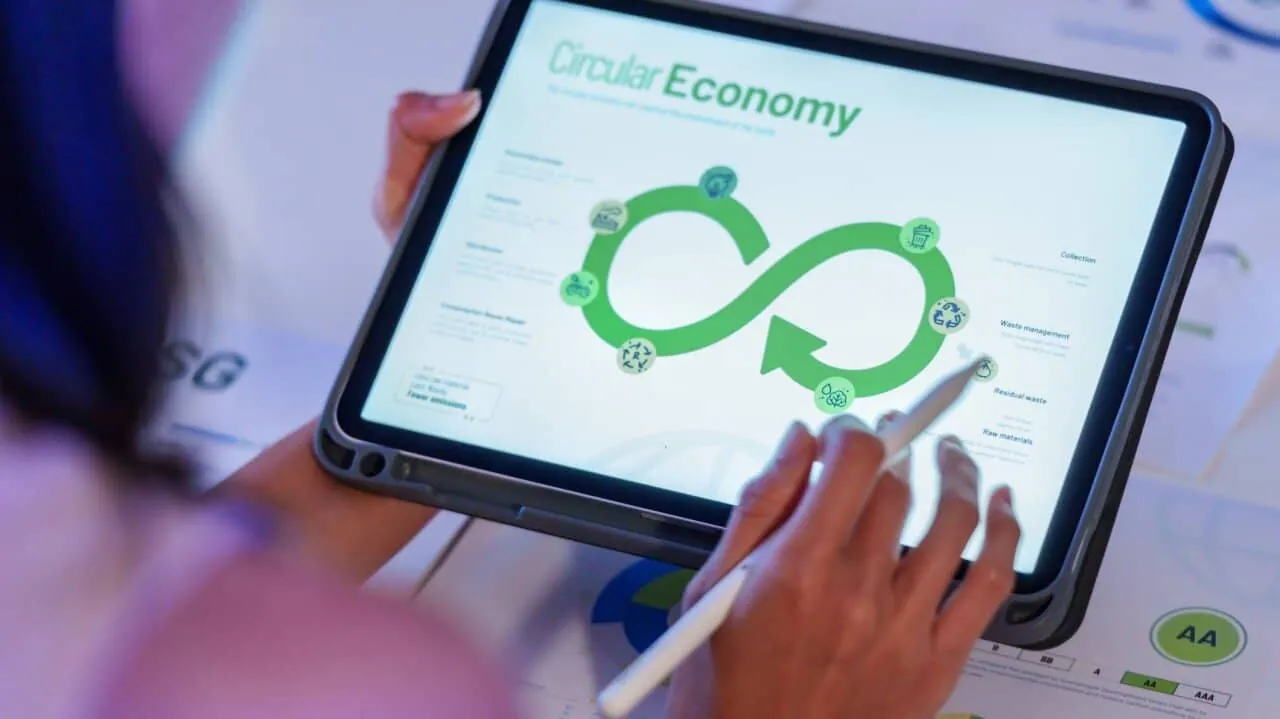
How Does Trade-In Support the Circular Economy?
Trade-in supports a circular technology model by creating a pathway for used electronics to move from one owner to another through reuse, refurbishment, resale, or recycling.
The circular process can look like:
Customer purchase → device use → trade-in → inspection → reuse/refurbishment/resale → additional useful life → recycling
Trade-in itself isn't the entire circular economy.
It is the intake mechanism that helps move a used device into the next stage of its lifecycle.
That distinction matters.
The sustainability outcome depends on what happens after the device is collected.
Can Trade-In Help Retailers Differentiate Their Ecommerce Experience?
Trade-in can become part of an ecommerce value proposition, particularly when it is integrated into the purchase journey rather than offered as a disconnected service.
However, retailers should avoid assuming that trade-in alone creates differentiation.
As more electronics retailers offer trade-in, the differentiating factors can shift toward:
- Ease of use
- Accuracy of valuation
- Speed
- Transparency
- Payment flexibility
- Customer support
- Integration quality
- Device lifecycle outcomes
The question is increasingly not simply:
“Do you offer trade-in?”
It is:
“How easy and valuable is your trade-in experience?”
How Should Retailers Measure a Trade-In Program?
Retailers should measure trade-in as both a customer-experience initiative and an economic program.
A useful measurement framework includes four areas.
Customer Metrics
- Trade-in participation
- Trade-in completion
- Conversion
- Cart abandonment
- Customer satisfaction
- Repeat purchase
Financial Metrics
- Trade-in value issued
- Net device recovery
- Incremental revenue
- Average order value
- Program cost
- Return on investment
Operational Metrics
- Device processing time
- Shipping completion
- Inspection accuracy
- Condition-adjustment rate
- Customer support volume
Sustainability Metrics
- Devices reused
- Devices refurbished
- Devices resold
- Devices recycled
- Materials recovered
Tracking these metrics gives retailers a clearer picture of whether trade-in is accomplishing its intended objectives.
How Does Phobio Help Ecommerce Brands Implement Trade-In?
Phobio provides trade-in technology and services designed to help brands and retailers build integrated device trade-in experiences.
Learn about Phobio's trade-in solutions
Depending on the program, capabilities can include:
- Device identification and valuation
- Customized customer experiences
- API-based integration
- Shipping and logistics
- Device inspection
- Customer communications
- Trade-in status tracking
- Device disposition
- Reporting
The implementation can be structured around the retailer's existing ecommerce experience rather than requiring customers to navigate an unrelated trade-in process.
For retailers, the objective is straightforward:
Make trade-in easy for the customer while moving the operational complexity behind the scenes.
What Should Ecommerce Retailers Do Next?
Retailers considering trade-in should begin by defining the customer problem they want to solve, then select a program structure and technology partner that can support the desired experience and economics.
A practical implementation process is:
- Define the objective. Is the goal to support upgrades, improve customer value, recover devices, increase engagement, or create another revenue opportunity?
- Identify eligible categories. Start with smartphones, tablets, laptops, wearables, or other products where meaningful residual value exists.
- Design the customer journey. Decide where trade-in appears in the ecommerce experience.
- Choose the valuation model. Determine how device values and condition are assessed.
- Build the operational workflow. Establish shipping, inspection, payment, and disposition processes.
- Integrate the technology. Use APIs or other available integration methods to connect trade-in with ecommerce systems.
- Measure results. Track participation, conversion, financial performance, operational efficiency, and device outcomes.
- Optimize continuously. Use customer and operational data to improve the experience.
The Future of Ecommerce Trade-In
The future of ecommerce trade-in is likely to be less about offering a separate trade-in program and more about integrating device value into the broader customer lifecycle.
Customers increasingly interact with retailers across multiple stages of device ownership.
They purchase a device.
They use it.
They upgrade.
They replace it.
They eventually need somewhere to take the old device.
Trade-in connects those moments.
For ecommerce retailers, that creates an opportunity to treat the device lifecycle as part of the customer relationship rather than ending the relationship at checkout.
The retailers that build effective trade-in experiences will need to focus on more than valuation.
They'll need to consider the entire journey:
Discover → value → purchase → ship → inspect → recover value → reuse or recycle
That's where trade-in becomes more than a promotional feature.
It becomes infrastructure for a more connected electronics lifecycle.
Final Thoughts
Integrated trade-in gives ecommerce retailers a way to connect the purchase of a new device with the residual value of the customer's existing technology.
It can help make upgrades more affordable, reduce friction, create another customer touchpoint, and establish a structured pathway for used devices.
But trade-in shouldn't be implemented simply because competitors offer it.
Retailers should define what they want the program to accomplish, measure the actual results, and design the experience around customer needs.
At Phobio, we help brands and retailers build trade-in experiences that connect valuation, logistics, inspection, and device disposition with the ecommerce journey.
The opportunity isn't simply to add a “Trade In” button.
It's to make device trade-in feel like a natural part of buying the next device.

Eric Attanasio
Chief Product Officer
Eric Attanasio is Chief Product Officer at Phobio, where he leads product strategy and platform development for large-scale consumer and enterprise trade-in programs. His focus is device lifecycle technology, trade-in platforms, and secondary-market economics.