
Article
We Almost Built the Wrong Thing. Then We Listened.
- Retail
- Trade-in
- In-store
Eric Attanasio
May 14, 2026 · 7 min read
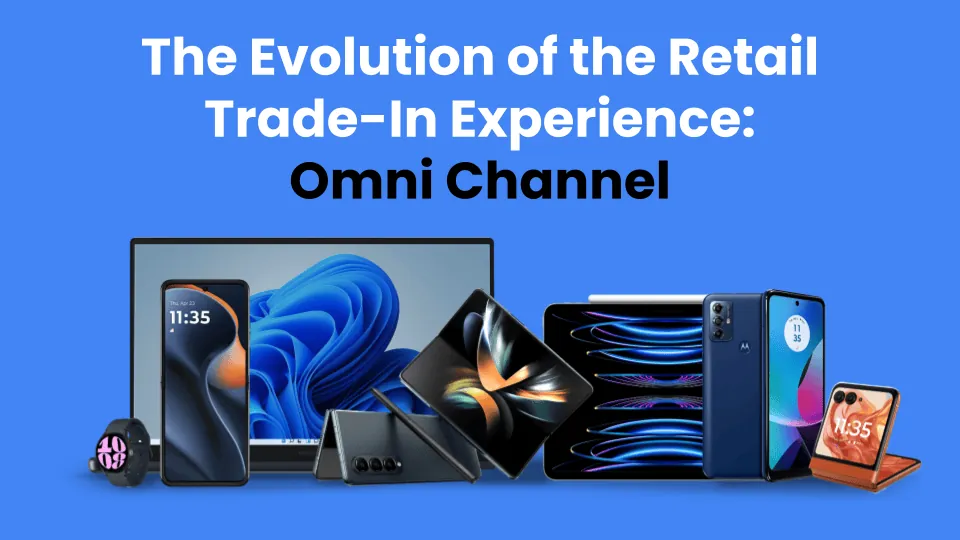
Phobio Omni-Channel is designed to reduce in-store trade-in friction by allowing customers to begin the trade-in process online and complete it in a retail store.
The product was built around a specific operational problem: customers often arrive at stores with devices that are not prepared for trade-in. When backups, account sign-outs, and other preparation steps have to happen at the store, trade-in transactions can take significantly longer and create additional work for store associates.
But Phobio Omni-Channel almost didn't get built.
Why Did Phobio Initially Remove Omni-Channel Trade-In From the Roadmap?
In the second half of 2025, omni-channel trade-in was on my product roadmap. Then I removed it.
The idea made intuitive sense. Two of the most important environments where trade-in happens—online shopping and in-store purchasing—should be connected.
Retailers have spent years connecting digital and physical shopping experiences. Buy online, pick up in-store (BOPIS) is one example of how retailers have moved parts of the customer journey online while preserving the value of the physical store.
Trade-in seemed like a natural extension of that model.
But there was a problem.
I couldn't clearly answer two basic product questions: What problem does this solve, and for whom?
A product idea can sound logical without addressing a sufficiently important customer problem. I had seen enough features launched on instinct alone to know how that ends.
So we pulled the feature.
I told myself I'd only bring it back if the market told me to.
How Did Phobio Validate the Need for Omni-Channel Trade-In?
Phobio validated the need for omni-channel trade-in through structured discovery conversations with retail partners in early 2026.
I made partner discovery a priority and established two rules for those conversations:
No presentations.
No questions designed to tell partners what I wanted to hear.
Instead, I wanted to hear retailers describe their operations in their own words.
We discussed questions such as:
What operational challenges do you face?
How does trade-in work today?
Where do store representatives struggle?
What causes customers to abandon a trade-in?
What happens during peak retail periods?
Where does the current process create delays?
The goal wasn't to validate a feature we had already decided to build.
The goal was to identify the problem worth solving.
What Problem Does Omni-Channel Trade-In Solve?
Omni-channel trade-in addresses a preparation and throughput problem in retail stores.
Across the retail partners we spoke with, a consistent challenge emerged: customers frequently arrived at the store without completing the preparation required to trade in their device.
A device might not be backed up. Accounts might still be signed in. The customer might need assistance completing other preparation steps before the trade-in could proceed.
During busy periods, those issues can have an outsized operational impact.
A customer may end up spending 30 to 60 minutes attempting to back up a device using in-store Wi-Fi. While that happens:
The customer waits.
The store representative is occupied.
Other customers remain in line.
Store throughput decreases.
The trade-in may ultimately be abandoned.
The underlying issue is not simply trade-in friction. It is a retail throughput and device-preparation problem.
That distinction mattered.
If the problem was primarily operational, then the solution needed to address the store environment rather than simply make the trade-in interface easier to use.
Why Is Device Preparation Important to In-Store Trade-In?
Device preparation is important because certain steps must be completed before a device can be successfully handed over for trade-in.
Depending on the device and program, preparation may include:
Backing up personal data
Signing out of user accounts
Preparing the device for transfer
Completing a condition assessment
Providing required trade-in information
When these activities happen at the store, they can consume time that could otherwise be spent completing the transaction or engaging with other customers.
Moving appropriate preparation steps online allows the customer to complete them before arriving.
What Is Phobio Omni-Channel?
Phobio Omni-Channel is a trade-in solution that allows customers to start their trade-in online and complete the transaction in-store.
The experience moves key preparation steps outside the physical store while maintaining the in-person component of the retail transaction.
A typical customer journey works like this:
Start online: The customer begins the trade-in through a branded online experience.
Select the device: The customer identifies the device they want to trade in.
Assess the device: The customer completes a condition assessment.
Prepare the device: The customer receives instructions for backing up the device and signing out of accounts.
Receive a reservation code: The customer receives a code that connects the online trade-in with the in-store transaction.
Visit the store: The customer brings the prepared device to the participating retail location.
Complete the transaction: The representative retrieves the reservation using the code or phone number and continues the process.
The result is a connected digital-to-store trade-in journey rather than two separate experiences.
How Does Phobio Omni-Channel Improve Retail Trade-In?
Phobio Omni-Channel is designed to reduce the amount of trade-in work that must happen at the store.
When customers arrive with their devices prepared, representatives can spend less time troubleshooting backups and account sign-outs and more time completing transactions and engaging with customers.
That can help retailers address several operational challenges:
Reduce the time required for individual trade-in transactions
Improve store throughput
Keep lines moving during peak periods
Reduce administrative work for store representatives
Give associates more time for customer engagement
Reduce friction that can lead to abandoned trades
The objective isn't simply to make trade-in faster.
It's to make trade-in fit more effectively into the broader retail experience.
What Happened When Phobio Tested the Product With Retail Partners?
After building Omni-Channel, we went back to the retail partners whose feedback had informed the product.
That step is important.
Partners could see their own feedback reflected in the product. They weren't being shown a generic solution and asked to adapt it to their operations. They were seeing a specific response to a problem they had described.
That creates a different kind of product conversation.
Several of those conversations have already led to deeper engagement and additional refinements to the product.
For me, there's also an important message in going back to partners after discovery: the conversation wasn't performative. The listening was real.
Why Is Partner Feedback Important to Product Development?
Partner feedback is valuable when it is treated as a product input rather than simply as market research.
Retailers understand their own operating environments better than a product team can from the outside. They know where customers struggle, where employees lose time, and what happens when transaction volume increases.
That makes direct discovery particularly valuable for products that operate inside physical retail environments.
The process we used for Omni-Channel was straightforward:
Listen → identify the problem → build → return to the partner → refine.
The important part is resisting the temptation to start with the product.
Start with the problem.
How Is Phobio Applying This Discovery Process Beyond Omni-Channel?
Omni-Channel is one part of a broader product-development approach at Phobio.
We're applying the same discovery process across our partner segments.
With business channel partners, we're examining how they use our platform day-to-day, where it falls short, and where there may be opportunities to expand its capabilities.
With online trade-in partners, we're looking at where customers lose trust or leave the experience before completing a trade.
The channel may change, but the product-development principle remains the same: identify the problem before deciding on the solution.
What Is the Goal of Phobio Omni-Channel?
The goal of Phobio Omni-Channel is to help retailers create faster trade-in transactions, increase completed trades, and reduce operational friction during high-volume periods.
For retailers, that means looking beyond the trade-in transaction itself.
The broader opportunity is to create a customer journey in which:
Digital tools handle preparation.
Customers arrive ready to complete the transaction.
Store representatives can focus on customers.
Retailers can improve transaction flow.
Trade-in becomes part of the broader purchasing experience.
The product is ultimately a response to what we heard from retail partners—not an idea we wanted to prove after the fact.
What Does the Future of Omni-Channel Trade-In Look Like?
The future of retail trade-in is increasingly connected to the broader omni-channel customer journey.
Customers already move between digital and physical channels when they shop. They research online, check inventory, purchase digitally, and interact with store associates.
Trade-in can follow the same model: customers prepare digitally and complete the transaction in-store.
For retailers, the opportunity is to make trade-in less of an operational interruption and more of an integrated part of the customer experience.
That's the principle behind Phobio Omni-Channel.
Products are better when they're built from the reality of how customers and businesses actually operate—not from assumptions about how they should operate.
And that's what listening is actually for.
If you're a retailer navigating trade-in preparation, store throughput, or peak-period operational challenges, we'd welcome the conversation about what Phobio Omni-Channel looks like in practice.

Eric Attanasio
Chief Product Officer
Eric Attanasio is Chief Product Officer at Phobio, where he leads product strategy and platform development for large-scale consumer and enterprise trade-in programs. His focus is device lifecycle technology, trade-in platforms, and secondary-market economics.